






























Red Lithuanian cow — beli atau jual


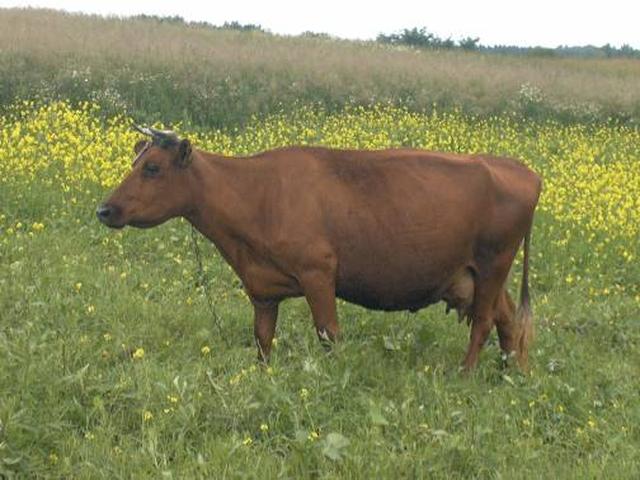
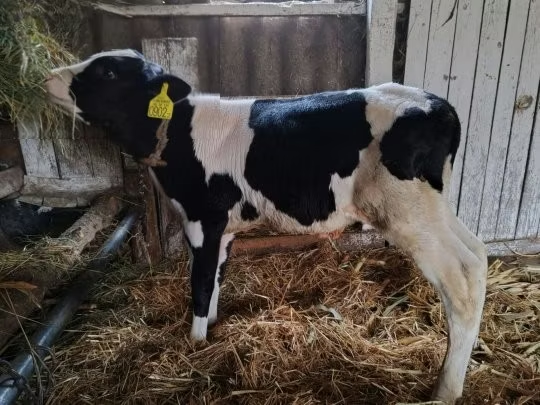
Breed history: The Red Lithuanian cow (its name in Lithuanian "Lietuvos žalieji," strangely translates to "Lithuanian greens") is a unique dual-purpose breed, valued for both milk production and meat quality. The breed was developed in the early 20th century in Lithuania. This process was lengthy and consisted of several stages aimed at improving the quality of the livestock. Initially, local Lithuanian cows were used. Breeders worked on improving their housing and feeding conditions, which positively affected the health of the animals. Then selection and crossbreeding with various breeds were conducted to enhance milk production. Among the breeds used were Ayrshire, Angeln, Dutch, Danish Red, Swiss Brown, and Shorthorn. The selection was aimed at improving the milk productivity of the animals. As a result of these efforts, a new breed with pronounced dairy traits was formed. The breed received official recognition in 1951, and in 1924, the Lithuanian Association for Breed Improvement was established. Since then, the improvement program has continued, including methods of purebred breeding and crossbreeding with Danish Red and Angeln breeds to enhance the fat content in milk. Exterior: Red Lithuanian cows are medium-sized animals with various shades of red coat. Their hooves are dark, and their horns point forward. The weight of the cows ranges from 470 to 520 kg. The average height at the withers is about 126 cm. The chest circumference of these animals is 188 cm, and the depth of the chest is 69 cm. The body structure of the cows is characterized by a long torso, and the ribcage is deep and long. Their limbs are of medium length. The udder is of medium size, deep, with cylindrical teats. Bulls can weigh up to 750 kg. Bulls have a more massive build compared to cows, as is the case with many other breeds. Housing conditions: Although Red Lithuanian cows have good endurance and can adapt to various climatic conditions, to achieve the highest productivity, they should be provided with good housing. In winter, the animals require a dry, warm shelter with good ventilation. This helps prevent diseases and maintains their health during the cold months.
Log masuk untuk mengetahui lebih lanjut
Log masukApa yang perlu diberi makan
Diet: For adult cows, the main feeds are hay, silage, concentrates (such as grain and meal), root crops, and supplements with vitamins and minerals. During the lactation period, the amount of concentrates increases to support the animal's heightened needs. For calves, the first days of life consist of colostrum, followed by a gradual introduction of whole milk or milk replacers. Gradually, calves begin to eat hay and concentrates. Pregnant cows require special attention to nutrition. It is important that the diet is rich in proteins, minerals, and vitamins for the normal development of the fetus.
Parameter fizikal
Berat jantan: 580–750 kg
Berat betina: 470–520 kg
Tinggi jantan: 120–150 cm
Tinggi betina: 110–126 cm
Habitat
Estonia
Latvia
Lithuania
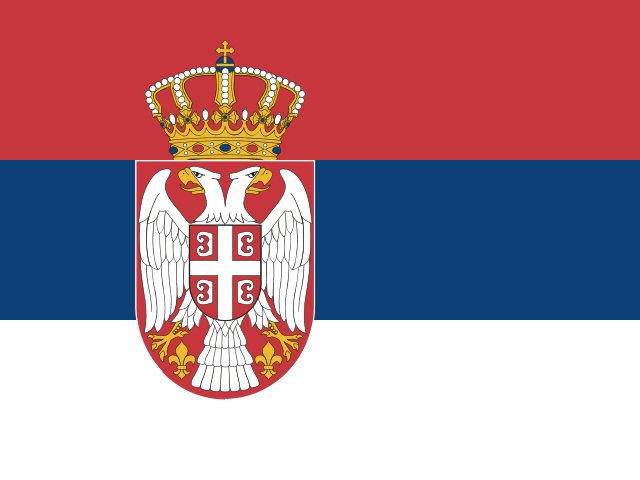
Rusia
Soalan lazim
Berapakah berat Red Lithuanian cow?
Haiwan dewasa: jantan — 580–750 kg, betina — 470–520 kg.
Berapakah ketinggian Red Lithuanian cow?
Ketinggian pada paras layu: jantan — 120–150 cm, betina — 110–126 cm.
Dari mana berasal Red Lithuanian cow?
Negara asal — Lithuania.
Di mana Red Lithuanian cow diternak?
Baka ini tersebar di: Estonia, Latvia, Lithuania, Rusia.
Apa yang perlu diberi makan kepada Red Lithuanian cow?
Diet: For adult cows, the main feeds are hay, silage, concentrates (such as grain and meal), root crops, and supplements with vitamins and minerals.
Soal jawab
Belum ada soalan. Ajukan soalan pertama!
Log masuk untuk bertanya
Iklan di wilayah anda