






































Zebu — buy or sell

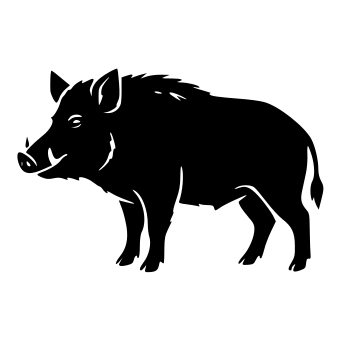


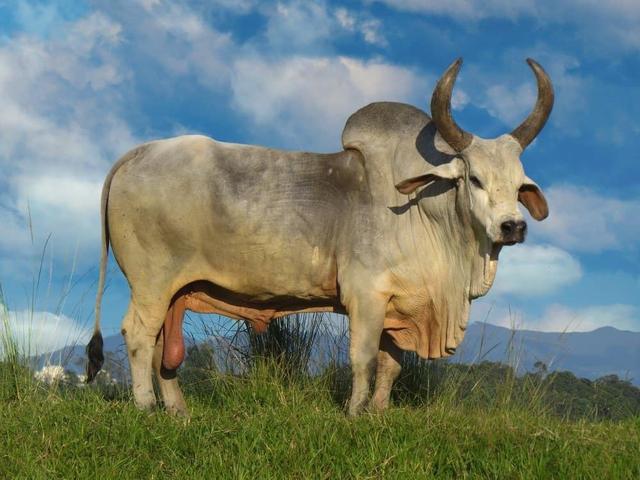
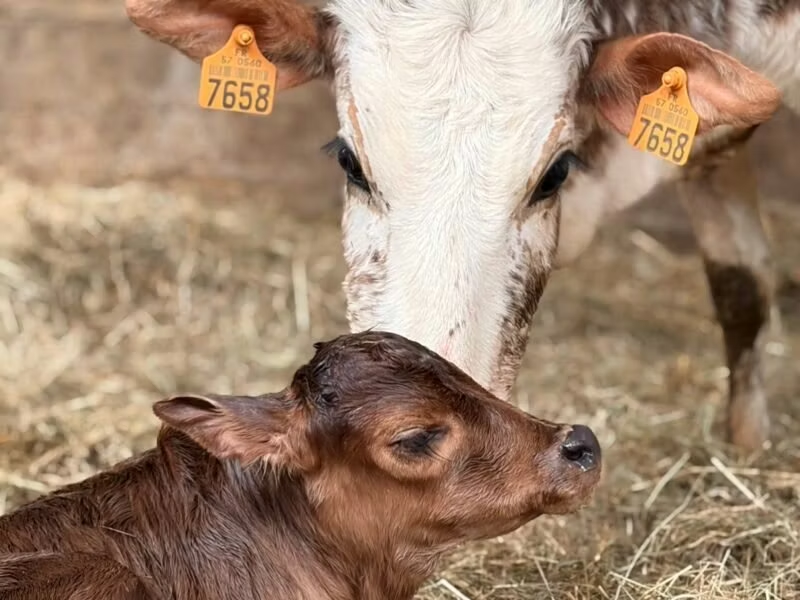
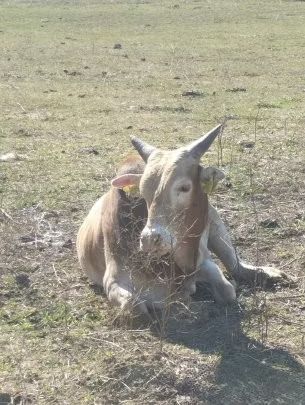
History of the breed: Zebu is a collective name for cattle of the species Bos indicus. They comprise numerous breeds that are predominantly found in South Asia, Africa, and tropical regions. The history of zebu dates back to ancient times, and they can be considered one of the first animals domesticated by humans. The exact dates when zebu were first domesticated remain a mystery, but archaeological findings confirm that these animals inhabited Central Asia as early as 3,000 to 2,500 years BC. Their presence in this region is noted in ancient materials studied by Russian and Soviet scientists. The original distribution area of zebu covered the northwest of South Asia, from where they began to spread to other regions. In the 17th and 18th centuries, small groups of zebu were exported from India to countries in South America. Brazil was particularly significant, as zebu were imported there to improve local cattle. Initially, these were single shipments, but from 1890 to 1921, more than 5,000 head were brought from India to Brazil. However, an outbreak of cattle plague temporarily halted this process. In the absence of new shipments from India, crossbreeding of zebu with local breeds began in Brazil, leading to the emergence of the so-called Indo-Brazilian Zebu. This breed combines the qualities of the imported animals with the adaptive abilities of the local cattle. Today, zebu can be found on almost all continents, but the largest populations are in two countries. India remains the leader, with about 270 million head, while Brazil has around 155 million. Zebu play an important role not only in agriculture but also in the culture of certain regions. Exterior: Zebu are cows that can vary greatly in appearance depending on the breed, but there are several characteristics common to most representatives of this group. One of the most noticeable features is the hump located in the withers area. It mainly consists of muscle rather than fat, and although its exact role is not fully understood, it is believed to help zebu regulate body temperature, which is especially important in hot climates. The skin of zebu is generally loose, slightly sagging, and pigmentation can vary depending on the breed of the animal. All representatives of this breed have horns, but their shape and size can differ significantly.
Log in to learn more
Sign inWhat to feed
Diet: The nutrition of zebu needs to be carefully thought out and balanced, taking into account the climatic conditions in which these animals are kept, as well as seasonal changes. The basis of the diet should be roughage, such as hay, straw, and silage, which provide the necessary amount of fiber. These feeds help maintain normal digestion in the animals and give them the energy needed for their daily activities. Additionally, it is important to include concentrated feeds in the zebu's diet, such as grains, cake, and compound feeds, as they provide the animals with proteins and carbohydrates essential for their health and productivity. During pregnancy and lactation, cows require additional nutrition that should be rich in protein and minerals. This is necessary to support the health of both the cow and her calf. Proteins help build and repair tissues, while minerals play an important role in metabolic processes, supporting the skeletal and dental systems, as well as other vital functions of the body. Calves in the first months of their lives feed on their mother's milk, which is their main source of nutrition, as it contains all the necessary nutrients needed for their normal growth and development. However, as they grow older, calves begin to transition to plant feeds, grass, and other plants that help them adapt to adult food. This transition should be gradual so that the calf's body can get used to the new food and digest it properly.
Physical parameters
Male Weight: 950–1150 kg
Female weight: 600–800 kg
Male height: 120–140 cm
Female height: 100–125 cm
Habitat Range
Afghanistan
Albania
Algeria
American Samoa
Andorra
Angola
Anguilla
Antigua & Barbuda
Argentina
Armenia
Aruba
Australia
Austria
Azerbaijan
Bahamas
Bahrain
Bangladesh
Barbados
Belarus
Belgium
Belize
Benin
Bermuda
Bhutan
Bolivia
Bosnia & Herzegovina
Botswana
Brazil
British Virgin Islands
Brunei
Bulgaria
Burkina Faso
Burundi
Cambodia
Cameroon
Canada
Cape Verde
Caribbean Netherlands
Cayman Islands
Central African Republic
Chad
Chile
China
Colombia
Comoros
Congo - Brazzaville
Congo - Kinshasa
Cook Islands
Costa Rica
Croatia
Cuba
Curaçao
Cyprus
Czechia
Côte d’Ivoire
Denmark
Djibouti
Dominica
Dominican Republic
Ecuador
Egypt
El Salvador
Equatorial Guinea
Estonia
Eswatini
Ethiopia
Faroe Islands
Fiji
Finland
France
French Guiana
French Polynesia
Gabon
Gambia
Georgia
Germany
Ghana
Gibraltar
Greece
Greenland
Grenada
Guadeloupe
Guam
Guatemala
Guernsey
Guinea
Guinea-Bissau
Guyana
Haiti
Honduras
Hong Kong SAR China
Hungary
Iceland
India
Indonesia
Iran
Iraq
Ireland
Isle of Man
Israel
Italy
Jamaica
Japan
Jersey
Jordan
Kenya
Kiribati
Kosovo
Kuwait
Laos
Latvia
Lebanon
Lesotho
Liberia
Libya
Liechtenstein
Lithuania
Luxembourg
Macao SAR China
Madagascar
Malawi
Malaysia
Maldives
Mali
Malta
Marshall Islands
Martinique
Mauritania
Mauritius
Mayotte
Mexico
Micronesia
Moldova
Monaco
Mongolia
Montenegro
Morocco
Mozambique
Myanmar (Burma)
Namibia
Nauru
Nepal
Netherlands
New Caledonia
New Zealand
Nicaragua
Niger
Nigeria
North Korea
North Macedonia
Northern Mariana Islands
Norway
Oman
Pakistan
Palau
Palestinian Territories
Panama
Papua New Guinea
Paraguay
Peru
Philippines
Poland
Portugal
Puerto Rico
Qatar
Romania
Russia
Rwanda
Réunion
Samoa
San Marino
Saudi Arabia
Senegal
Serbia
Seychelles
Sierra Leone
Singapore
Sint Maarten
Slovakia
Slovenia
Solomon Islands
Somalia
South Africa
South Korea
South Sudan
Spain
Sri Lanka
St. Kitts & Nevis
St. Lucia
St. Martin
St. Vincent & Grenadines
Sudan
Suriname
Sweden
Switzerland
Syria
São Tomé & Príncipe
Taiwan
Tanzania
Thailand
Timor-Leste
Togo
Tonga
Trinidad & Tobago
Tunisia
Turks & Caicos Islands
Tuvalu
Türkiye
U.S. Virgin Islands
Uganda
Ukraine
United Arab Emirates
United Kingdom
United States
Uruguay
Vanuatu
Venezuela
Vietnam
Wallis & Futuna
Western Sahara
Yemen
Zambia
Zimbabwe
Åland Islands
Frequently Asked Questions
How much does Zebu weigh?
Adult animal: male — 950–1150 kg, female — 600–800 kg.
How tall is Zebu?
Height at the withers: male — 120–140 cm, female — 100–125 cm.
Where does Zebu come from?
Country of origin — Indonesia.
Where is Zebu bred?
The breed is common in: Afghanistan, Albania, Algeria, American Samoa, Andorra, Angola, Anguilla, Antigua & Barbuda.
What should Zebu be fed?
Diet: The nutrition of zebu needs to be carefully thought out and balanced, taking into account the climatic conditions in which these animals are kept, as well as seasonal changes.
Q&A
No questions yet. Ask the first!
Log in to ask a question
Listings in your area