






























Braford — iibso ama iibi


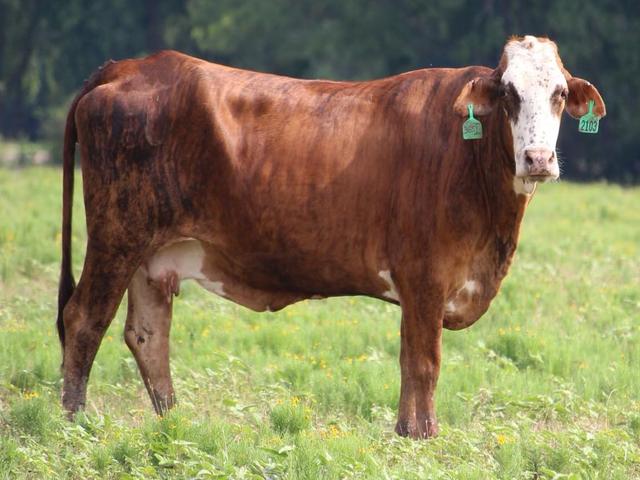
Breed history: Braford is a breed of beef cattle developed by crossing Hereford and Brahman cattle. This breed is valued for its endurance, resistance to hot climates, and high meat quality. Generally, it is a breed of cows that can boast of dual ancestry. It was independently developed in two countries — the USA and Australia. Although they share common ancestors, the American and Australian lines of Brafords have their distinctive features. In 1947, in Florida, USA, breeder Alto Adams Jr. began crossing Hereford bulls with Brahman cows. His goal was to create a new breed that combined the meat qualities of Herefords with the resilience of Brahmans to the hot and humid climate of Florida. The initial attempts at crossing were not as successful as expected. The first generations of hybrids exhibited health problems, particularly with legs, eyes, and overall viability. However, breeders did not give up and continued working on the breed. As a result of many years of selection, an optimal blood ratio was achieved: 3/8 Brahman and 5/8 Hereford. This combination allowed for the creation of a breed that possessed both good meat qualities and high resistance to hot climates. In 1969, the International Braford Cattle Association was established in Florida. Alongside American breeders, work was also being done in Australia to create the Braford breed. From 1946 to 1952, the Australian line of Brafords was developed in Queensland. It differs from the American line in its blood ratio: half Hereford and half Brahman. In 1962, the Australian Braford Breeders Society was established. Exterior: Braford is a breed that successfully combines the traits of its two ancestors — Hereford and Brahman. The color of Brafords is red and white, inherited from Herefords. White markings are usually found on the head, belly, lower legs, and tail tip. Occasionally, individuals with a brindle coat are encountered, adding diversity to the overall picture. Brafords have a wide head with a pronounced forehead. Their ears can be medium or large, straight or drooping. The build of Brafords is stocky and muscular. They have a well-developed ribcage, indicating strong health and endurance. A slight hump can be seen on their neck, inherited from Brahmans. The skin of Brafords is loose, and their coat is short and smooth. This helps them cope better with heat and humidity.
Gal si aad wax badan u ogaato
Soo galMaxaa lagu quudiyaa
Diet: The basis of nutrition for Brangus, as well as for Herefords, is high-quality hay or silage, and they can also be fed spinifex if the cows live in the desert. To gain weight and improve meat quality, grains such as corn (preferably flaked or steamed), oats, or barley are added to the diet. However, it is important for Brangus not to overdo the protein in the grain diet — its content should not exceed 12%. To ensure the necessary protein level, soybean or cottonseed meal can be added to the diet. But remember that excess protein is undesirable for Brahmans. Mineral supplements are an important element of Brangus nutrition. They should have constant access to salt, calcium, phosphorus, and other trace elements. It is recommended to use a salt lick for Brangus. Water is the essence of life, and Brangus are no exception. Cows should have constant access to clean and fresh water. The feeding regimen also matters. It is recommended for Brangus to have two or three meals a day with a time limit for eating of 45-60 minutes. This helps stimulate appetite and prevent overeating. When formulating the diet, it is important to consider climatic conditions. In hot weather, shade and sufficient water must be provided. An approximate diet for an adult Brangus cow includes hay or silage depending on quality and availability. It is supplemented with 1-3 kg of grain mix per day, consisting of corn, oats, and barley. It is also possible to include 0.5-1 kg of protein supplement per day, such as soybean or cottonseed meal. Do not forget about the mineral supplement — the cow should have free access to a salt lick. And, of course, constant access to fresh water. But these are just general recommendations. When formulating the diet, it is necessary to consider the individual characteristics of each cow.
Sifooyinka jireed
Miisaanka labka: 900–1000 kg
Miisaanka dheddigga: 550–750 kg
Dhererka labka: 120–150 cm
Dhererka dheddigga: 110–135 cm
Deegaanka uu ku nool yahay
Awstaraaliya
Babwa Niyuu Gini
Baraasiil
Jabaan
Koonfur Afrika
Malaysiya
Maraykanka
Meksiko
Niyuusiilaand
Shiinaha
Su'aalaha inta badan la isweydiiyo
Intee ayuu miisaamaa Braford?
Xayawaan qaangaar ah: lab — 900–1000 kg, dhedig — 550–750 kg.
Waa imisa dhererka Braford?
Dhererka garbaha: lab — 120–150 cm, dhedig — 110–135 cm.
Xaggee ayuu ka soo jeedaa Braford?
Waddanka asalka ah — Maraykanka.
Halkee lagu dhaqaa Braford?
Noocan waxaa laga helaa: Awstaraaliya, Babwa Niyuu Gini, Baraasiil, Jabaan, Koonfur Afrika, Malaysiya, Maraykanka, Meksiko.
Maxaa lagu quudiyaa Braford?
Diet: The basis of nutrition for Brangus, as well as for Herefords, is high-quality hay or silage, and they can also be fed spinifex if the cows live in the desert.
Su'aal iyo jawaab
Weli su'aalo ma jiraan. Weydii kan ugu horreeya!
Soo gal si aad su'aal u weydiiso