




































Montbéliarde — beli atau jual


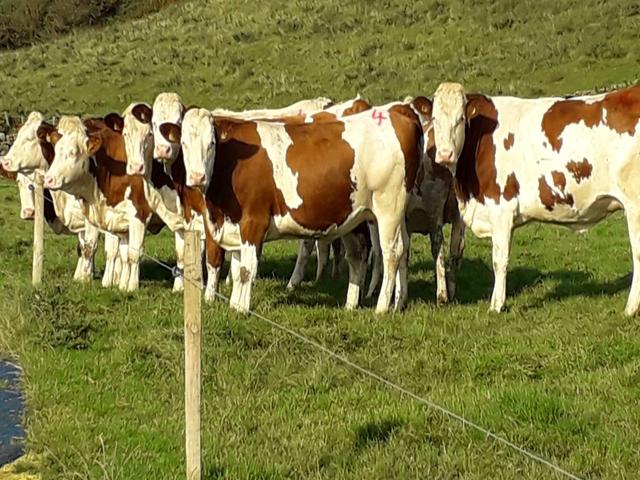
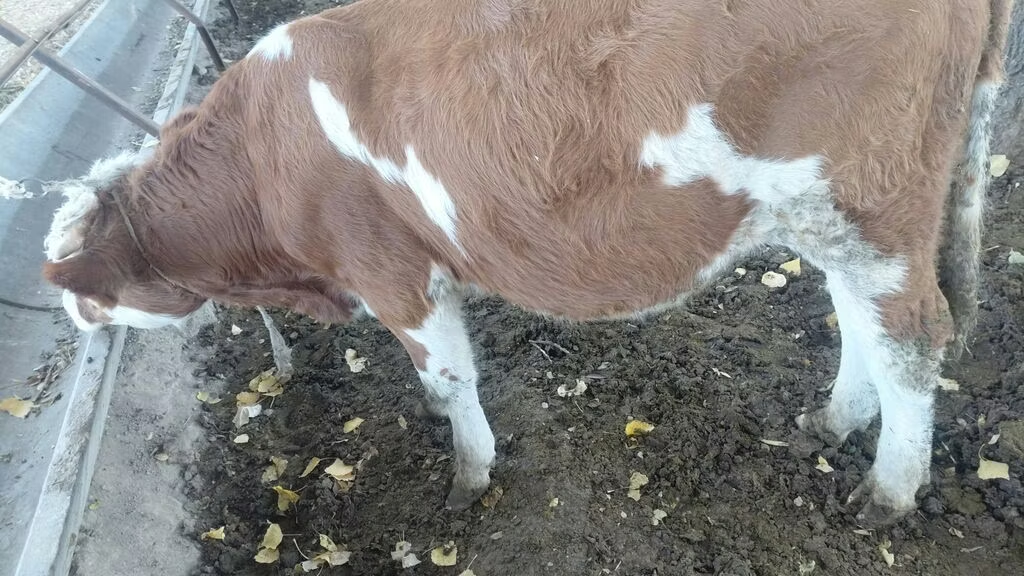
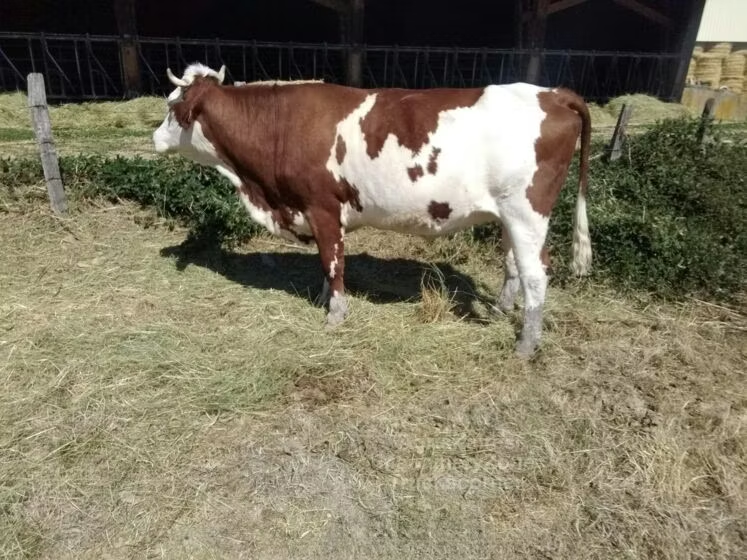
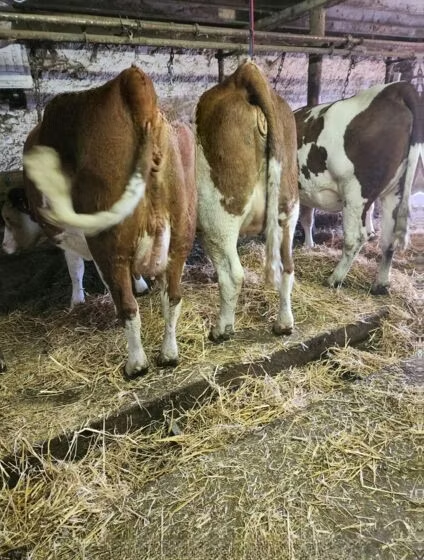
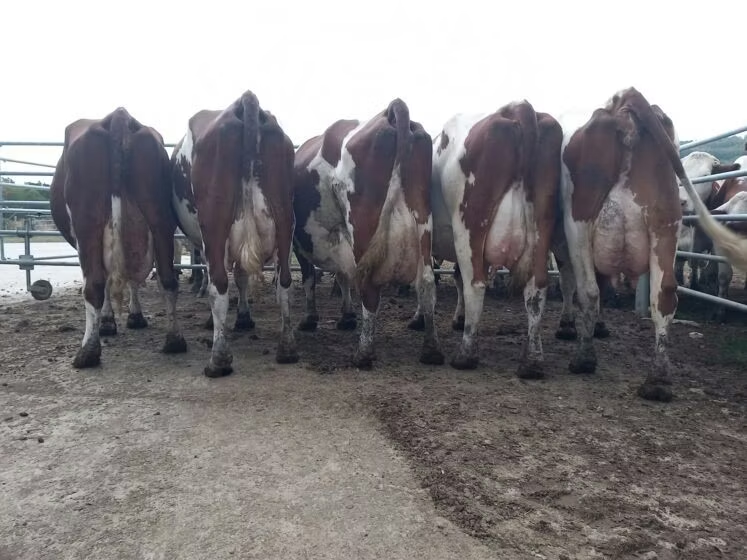
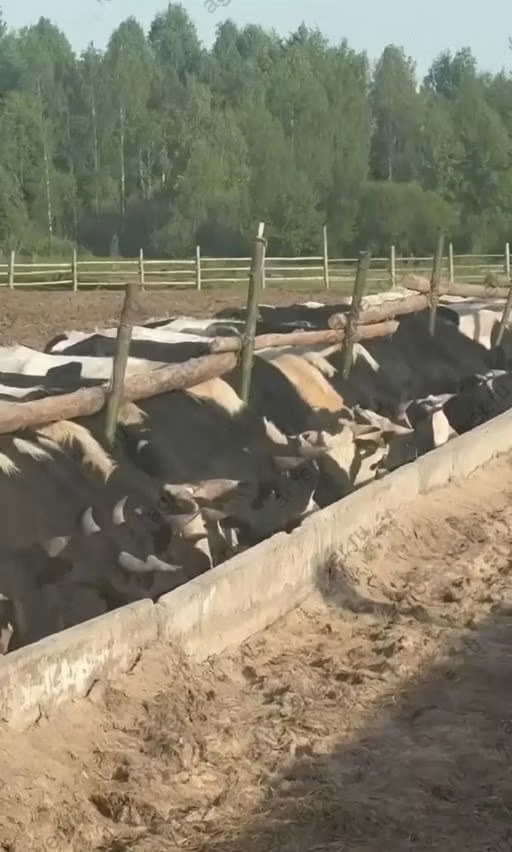
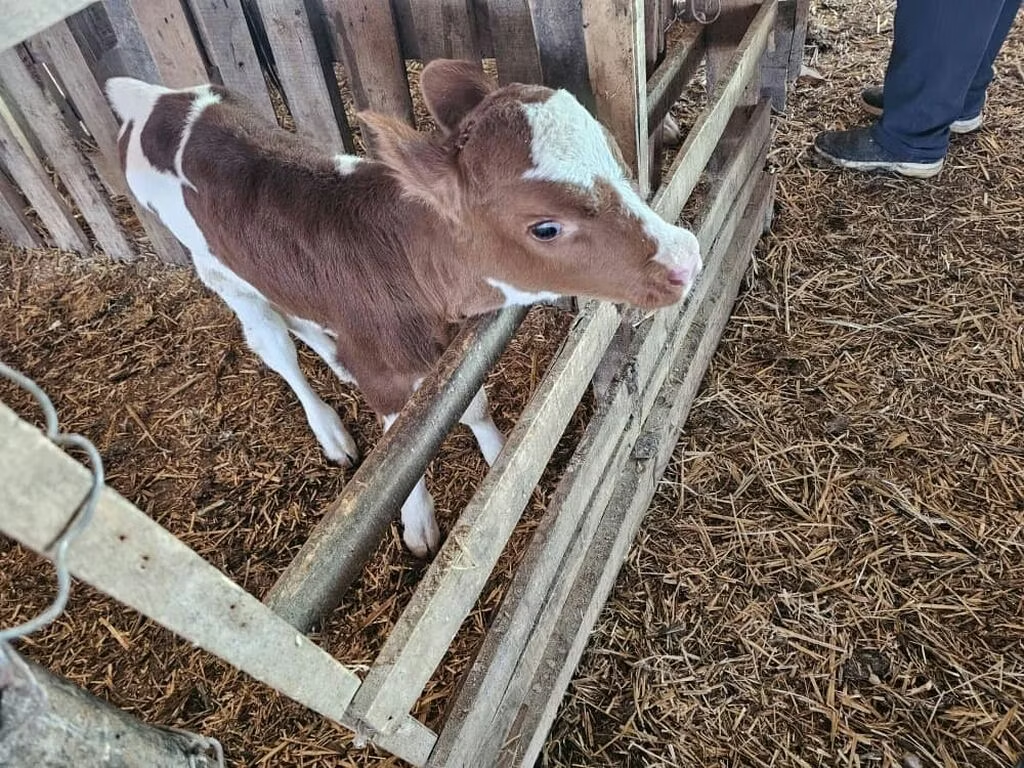
History of the breed. The Montbéliarde breed is a dual-purpose breed, developed in France in 1889. In the 18th century, the ancestors of Montbéliard cattle were brought from Switzerland to France. In the Franche-Comté region, this breed became widespread, making up 95% of all dairy cattle. The breed is named after the county of Montbéliard, located in this region. Montbéliarde cattle are well-suited for both milk production and meat production. Montbéliarde milk is used to produce elite cheese varieties. Individuals of this breed are large, with cows weighing up to 700 kg and bulls up to 1200 kg. They do not require special housing conditions and can successfully adapt to various climatic conditions. The Montbéliarde breed is also popular in other countries around the world. Animals are exported to Central Europe, North Africa, the United Kingdom, Australia, Russia, and other countries. Exterior. Montbéliard cattle have a spotted-white coat, with a large, proportional body structure. The head is large and symmetrical, the neck is powerful and of medium length. The chest is deep, with bulls having a strong, wide, and well-developed brisket, and the depth of the chest is 70–78 cm. They have a straight back, closely fitting shoulders, and large, massive legs. The height at the withers is 140–150 cm, with males always being larger than females. The body length is approximately 160–165 cm, with bulls weighing up to 1200 kg and cows up to 700 kg. The udder is cup-shaped, with a horizontal base. The teats are directed inward, positioned in the middle of each quarter, and there are many veins on the udder. The udder is located higher than the hindquarters, with the back part being higher than the front. The tail is of medium length, with a white tuft, and the hair is short, soft, but dense. Housing conditions. Montbéliarde cattle were developed in the mountainous regions of France, where summers are hot and winters are cold. Therefore, this breed does not require special housing conditions; Montbéliardes can adapt to various weather conditions. They can be kept loose or in individual stalls. Cows of this breed are undemanding in their diet. Coarse feeds can be included in the cows' diet. However, to achieve high milk yields, all necessary trace elements must be present in the animals' diet. Direction. Dual-purpose. Montbéliarde udders are usually well-formed and not prone to mastitis.
Log masuk untuk mengetahui lebih lanjut
Log masukApa yang perlu diberi makan
Diet. Montbeliardes are undemanding in food, they digest rough feeds well, but require a large amount of succulent feeds. Montbeliardes have a low feed conversion ratio; however, the diet must be balanced and rich in microelements. Animals are fed two to three times a day; to gain weight, it is recommended to supplement with calcium, protein, and phosphorus. Milking cows must also be fed qualitatively and adequately, requiring 50 kg of feed per day, consisting of 8-10 kg of compound feed, and 40 kg of hay and silage. The basis of the Montbeliarde diet consists of root crops, silage, hay, succulent and concentrated feeds, and corn silage.
Parameter fizikal
Berat jantan: 850–1200 kg
Berat betina: 550–700 kg
Tinggi jantan: 140–155 cm
Tinggi betina: 135–145 cm
Habitat
Afghanistan
Afrika Selatan
Albania
Algeria
Amerika Syarikat
Andorra
Angola
Anguilla
Antigua dan Barbuda
Arab Saudi
Argentina
Armenia
Aruba
Australia
Austria
Azerbaijan
Bahamas
Bahrain
Bangladesh
Barbados
Belanda
Belanda Caribbean
Belarus
Belgium
Belize
Benin
Bermuda
Bhutan
Bolivia
Bosnia dan Herzegovina
Botswana
Brazil
Brunei
Bulgaria
Burkina Faso
Burundi
Cameroon
Cape Verde
Chad
Chile
China
Colombia
Comoros
Congo - Brazzaville
Congo - Kinshasa
Costa Rica
Cote d’Ivoire
Croatia
Cuba
Curacao
Cyprus
Czechia
Denmark
Djibouti
Dominica
Ecuador
El Salvador
Emiriah Arab Bersatu
Estonia
Eswatini
Ethiopia
Fiji
Filipina
Finland
Gabon
Gambia
Georgia
Ghana
Gibraltar
Greece
Greenland
Grenada
Guadeloupe
Guam
Guatemala
Guernsey
Guiana Perancis
Guinea
Guinea Bissau
Guinea Khatulistiwa
Guyana
Haiti
Honduras
Hong Kong SAR China
Hungary
Iceland
India
Indonesia
Iran
Iraq
Ireland
Isle of Man
Israel
Itali
Jamaica
Jepun
Jerman
Jersey
Jordan
Kanada
Kazakhstan
Kemboja
Kenya
Kepulauan Aland
Kepulauan Cayman
Kepulauan Cook
Kepulauan Faroe
Kepulauan Mariana Utara
Kepulauan Marshall
Kepulauan Solomon
Kepulauan Turks dan Caicos
Kepulauan Virgin A.S.
Kepulauan Virgin British
Kiribati
Korea Selatan
Korea Utara
Kosovo
Kuwait
Kyrgyzstan
Laos
Latvia
Lesotho
Liberia
Libya
Liechtenstein
Lithuania
Lubnan
Luxembourg
Macau SAR China
Macedonia Utara
Madagaskar
Maghribi
Malawi
Malaysia
Maldives
Mali
Malta
Martinique
Mauritania
Mauritius
Mayotte
Mesir
Mexico
Micronesia
Moldova
Monaco
Mongolia
Montenegro
Mozambique
Myanmar (Burma)
Namibia
Nauru
Nepal
New Caledonia
New Zealand
Nicaragua
Niger
Nigeria
Norway
Oman
Pakistan
Palau
Panama
Papua New Guinea
Paraguay
Perancis
Peru
Poland
Polinesia Perancis
Portugal
Puerto Rico
Qatar
Republik Afrika Tengah
Republik Dominica
Reunion
Romania
Rusia
Rwanda
Sahara Barat
Saint Kitts dan Nevis
Saint Lucia
Saint Martin
Saint Vincent dan Grenadines
Samoa
Samoa Amerika
San Marino
Sao Tome dan Principe
Senegal
Sepanyol
Serbia
Seychelles
Sierra Leone
Singapura
Sint Maarten
Slovakia
Slovenia
Somalia
Sri Lanka
Sudan
Sudan Selatan
Surinam
Sweden
Switzerland
Syria
Taiwan
Tajikistan
Tanzania
Thailand
Timor-Leste
Togo
Tonga
Trinidad dan Tobago
Tunisia
Turkiye
Turkmenistan
Tuvalu
Uganda
Ukraine
United Kingdom
Uruguay
Uzbekistan
Vanuatu
Venezuela
Vietnam
Wallis dan Futuna
Wilayah Palestin
Yaman
Zambia
Zimbabwe
Soalan lazim
Berapakah berat Montbéliarde?
Haiwan dewasa: jantan — 850–1200 kg, betina — 550–700 kg.
Berapakah ketinggian Montbéliarde?
Ketinggian pada paras layu: jantan — 140–155 cm, betina — 135–145 cm.
Dari mana berasal Montbéliarde?
Negara asal — Perancis.
Di mana Montbéliarde diternak?
Baka ini tersebar di: Afghanistan, Afrika Selatan, Albania, Algeria, Amerika Syarikat, Andorra, Angola, Anguilla.
Apa yang perlu diberi makan kepada Montbéliarde?
Diet.
Soal jawab
Belum ada soalan. Ajukan soalan pertama!
Log masuk untuk bertanya
Iklan di wilayah anda