






























Auliyeatinskaya breed — beli atau jual


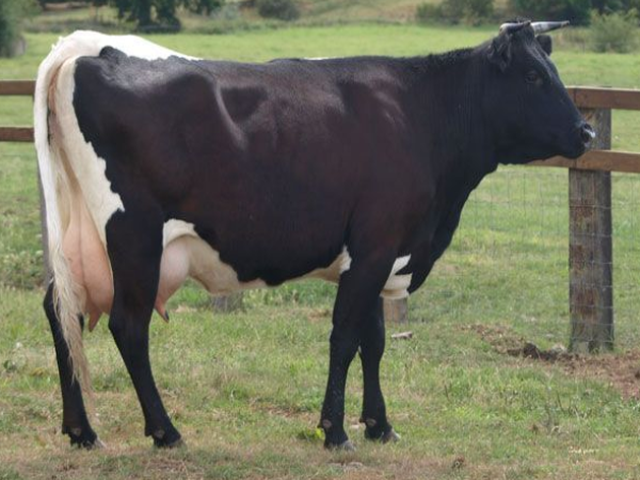
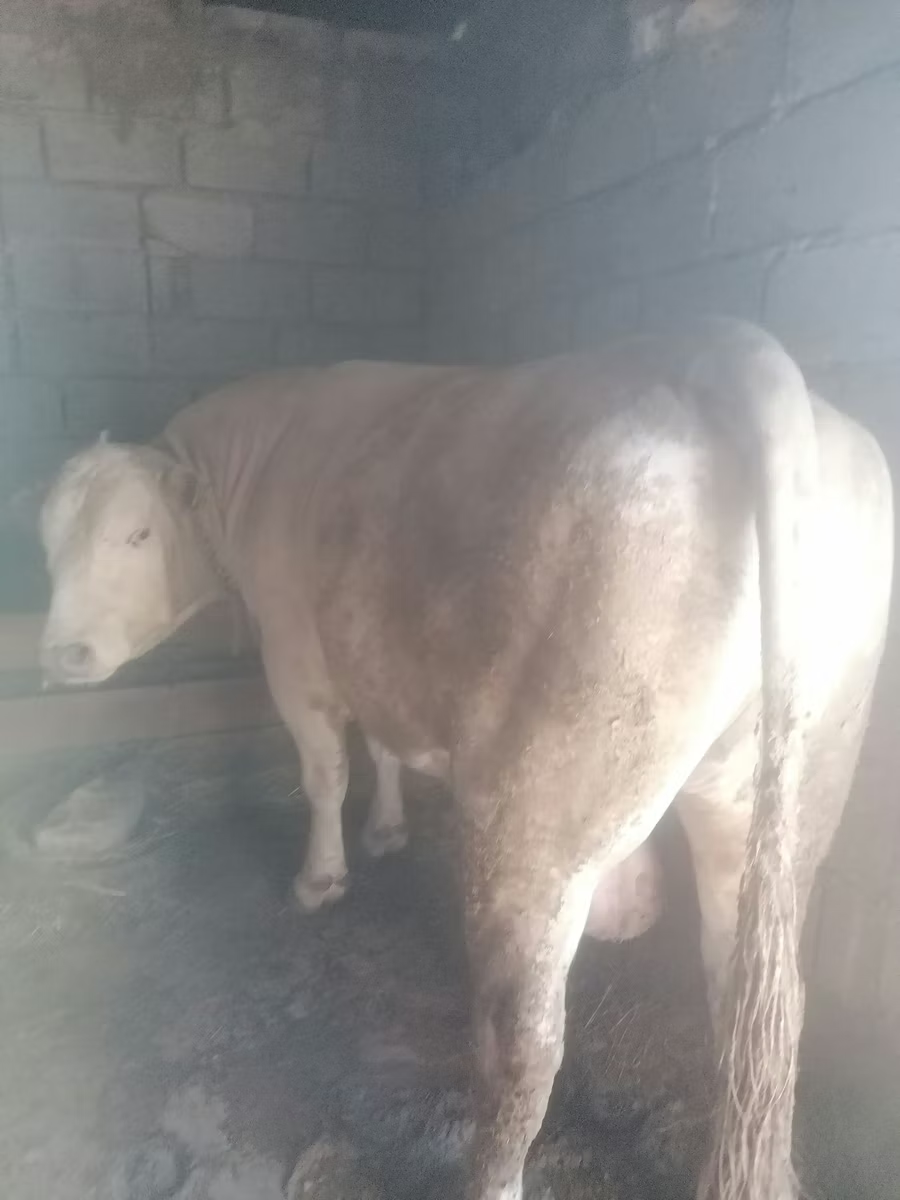
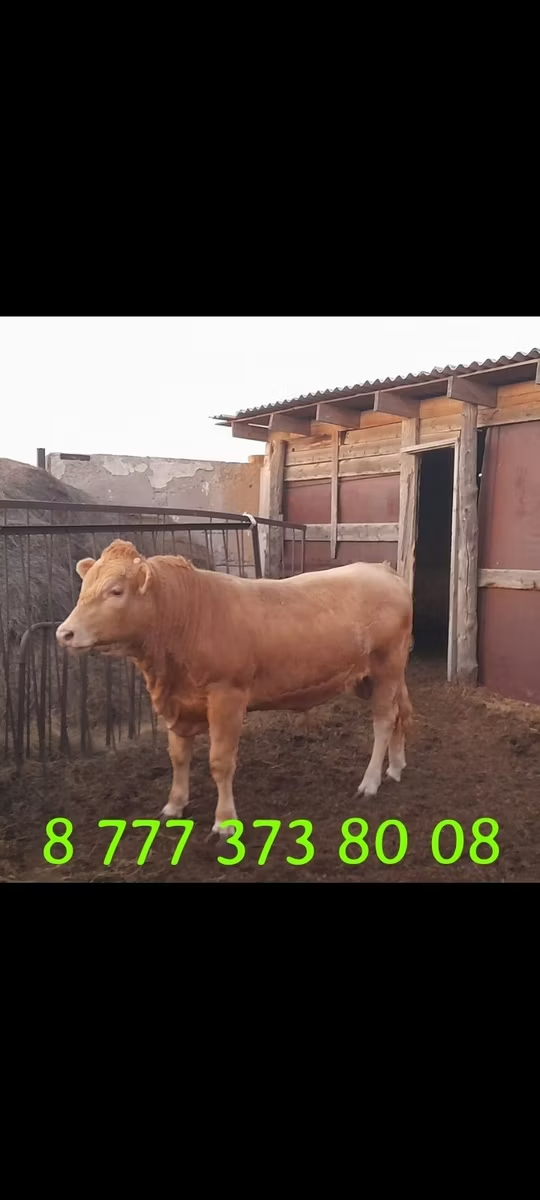
Breed history: The Auliyeatinskaya cow is a breed of dairy cattle developed in Kazakhstan. Despite its historical significance, the breed is among the rare ones. The history of the Auliyeatinskaya cow began in 1885 in the Auliye-Ata district (now Taraz). At that time, local Kazakh cattle were crossed with the black-spotted Dutch breed. The resulting offspring were bred "in themselves," meaning they were interbred to consolidate the desired traits. Gradually, the hybrids spread to other regions of Kazakhstan, as well as to some areas of Kyrgyzstan and Uzbekistan. Systematic breeding work with Auliyeatinskaya cattle began in 1935. Collective breeding farms and state breeding stations were organized. Initially, local cattle were crossed with Ostfriesian bulls, and the hybrids were raised under improved feeding and housing conditions. All this contributed to the formation and improvement of the breed. The Auliyeatinskaya breed was officially registered in 1950. From that moment, it gained recognition and began to develop as an independent breed. In 1952, the Kazakh Research Institute of Animal Husbandry joined the work on the breed with the participation of scientists from Kyrgyzstan, Moscow, and Tashkent. Despite all the work done and its historical significance, the Auliyeatinskaya breed remains rare. In 2019, there were only 4,245 heads of this breed in Kazakhstan, and no more than 1,500 in Kyrgyzstan. This indicates that further efforts are needed for its preservation and development. Exterior: In terms of body structure, the Auliyeatinskaya cow resembles the Holstein breed but has its own distinctive features. Auliyeatinskaya cows have a strong constitution and elongated body. Their skeleton is slender, and their head and neck are small. Most individuals have horns. The back, withers, and loin are straight, while the hindquarters are slightly raised. This gives them a harmonious and balanced appearance. The height of Auliyeatinskaya cows is small, reaching 127 cm at the withers. The average weight of cows is 500 kg, while bulls weigh 800 kg, although some individuals can weigh up to 1,100 kg. In terms of more precise measurements, the average dimensions of adult cows are as follows: height at the withers — 128.8 cm, chest depth — 69.2 cm, diagonal body length — 153.0 cm, chest circumference — 186.2 cm, and pastern circumference — 18.7 cm.
Log masuk untuk mengetahui lebih lanjut
Log masukApa yang perlu diberi makan
Diet: The Auliyeatin cow is a breed that does not require complex care and feeding. It is quite undemanding in terms of food and is capable of effectively utilizing available feed resources. In summer, the basis of the diet for Auliyeatin cows consists of fresh grass from pastures. They happily consume a variety of vegetation, obtaining all the necessary nutrients. In the winter period, calves are supplemented with silage and compound feed to provide their bodies with essential vitamins and minerals. Adult individuals are given straw, which serves as a source of fiber. Overall, straw and green mass make up about 60-65% of the diet of Auliyeatin cows. The remaining 40% consists of concentrated feeds, which are mixed with straw. Auliyeatin cows can also consume large amounts of roughage, such as beets and silage. Bone meal and dicalcium phosphate are used as supplements. For breeding bulls, it is necessary to add legumes and cereal crops, succulent feeds, and high-quality hay to the diet. Special attention is paid to the nutrition of calves in the first months of life. Immediately after birth, the calf should be placed to the mother's udder to receive colostrum. Colostrum is the first milk, rich in immunoglobulins, which protect the calf from diseases. In the first 3 months, milk is the main source of nutrients for the calf. During the entire period of milk feeding, it consumes up to 1500 kg of milk. It is important to timely acclimate the calf to feeds and concentrates. In the first months, less valuable feeds are given, and as they grow, more nutritious concentrated mixtures are introduced. The feeds for supplementation are placed in special feeders from which adult cows cannot eat. If the young stock gains weight well and reaches 200 kg or more by 6 months, early weaning from the mother can be practiced. Calcium and phosphorus are added to the supplementation at a rate of 3-5 grams per head per day.
Parameter fizikal
Berat jantan: 800–1100 kg
Berat betina: 480–510 kg
Tinggi jantan: 120–145 cm
Tinggi betina: 110–127 cm
Habitat
Belarus
Kazakhstan
Kyrgyzstan
Rusia
Turkmenistan
Uzbekistan
Soalan lazim
Berapakah berat Auliyeatinskaya breed?
Haiwan dewasa: jantan — 800–1100 kg, betina — 480–510 kg.
Berapakah ketinggian Auliyeatinskaya breed?
Ketinggian pada paras layu: jantan — 120–145 cm, betina — 110–127 cm.
Dari mana berasal Auliyeatinskaya breed?
Negara asal — Kazakhstan.
Di mana Auliyeatinskaya breed diternak?
Baka ini tersebar di: Belarus, Kazakhstan, Kyrgyzstan, Rusia, Turkmenistan, Uzbekistan.
Apa yang perlu diberi makan kepada Auliyeatinskaya breed?
Diet: The Auliyeatin cow is a breed that does not require complex care and feeding.
Soal jawab
Belum ada soalan. Ajukan soalan pertama!
Log masuk untuk bertanya
Iklan di wilayah anda