










Red Gorbatov Cow — iibso ama iibi


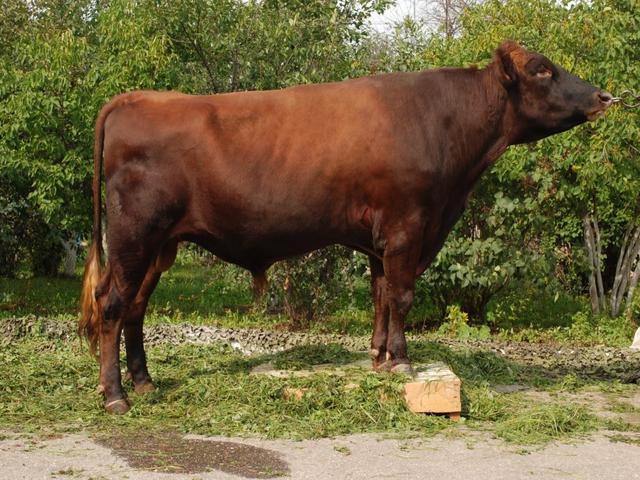
History of the breed: The Red Gorbatov cow is a unique heritage of Russian animal husbandry, combining both dairy and meat qualities. The origin of the Red Gorbatov breed dates back to the 19th century in the Nizhny Novgorod province, in the Gorbatov district, which today is part of the Nizhny Novgorod region. The breed was formed through the crossbreeding of the local Priokskiy cattle with Tyrolean cattle, which was imported in the early 19th century. Tyrolean cattle were known for their high-fat milk, which positively influenced the productive qualities of the future breed. During the selection process, the focus was not only on productivity but also on the color of the animals. Preference was given to red coloration, which became a characteristic feature of the breed. All these efforts culminated in the official recognition of the breed in 1926. However, the fate of the Red Gorbatov breed of cows has been challenging. In 1976, it was excluded from the breed zoning plan in the Nizhny Novgorod and Vladimir regions. This decision led to a significant reduction in the number of animals and put the breed at risk of extinction. Despite the difficulties, the breed has been preserved thanks to the persistence of individual farmers and specialized breeding farms. Today, active measures are being taken for its preservation and restoration. Modern biotechnologies are being applied, including cryopreservation of sperm and embryos, to maintain the unique gene pool of this breed. Exterior: Red Gorbatov cows are medium-sized animals with a strong build. The height at the withers for cows is 118-120 cm, and for bulls, it is 127-130 cm. The body is long, with a strong but light skeleton. The head is short, with a broad forehead and a straight profile. The horns are light with dark tips. The neck is of medium length and width. The chest of the animals is deep and wide, with a width of 38-40 cm and a depth of 60-68 cm. The chest circumference is 180-182 cm. The back is straight and wide, and the loin is also wide. The hindquarters are slightly raised, wide, and the limbs are relatively short. Sableness can sometimes be observed. The tail is long, wide, and set high. The coat color of the cows is red, with various shades ranging from cherry-red to light red. Some individuals may have white markings on the belly or udder. Bulls generally have a darker coat, especially in the head and neck area, where the color is almost black. The udder of the animals is of medium size.
Gal si aad wax badan u ogaato
Soo galMaxaa lagu quudiyaa
Diet: The basis of the nutrition for the Red Gorbatov cow consists of roughage, such as hay and silage. Juicy feeds, including grass and root crops, are also important, as well as concentrated feeds, such as grain and cake. During pregnancy and lactation, cows require more concentrated feeds. It is also advisable to provide them with vitamin and mineral supplements to maintain health. Calves receive milk from their mother in the first months of life, but gradually transition to plant-based feeds.
Sifooyinka jireed
Miisaanka labka: 650–900 kg
Miisaanka dheddigga: 400–650 kg
Dhererka labka: 127–130 cm
Dhererka dheddigga: 118–120 cm
Deegaanka uu ku nool yahay
Belarus
Booland
Estooniya
Kasaakhistaan
Kirgistaan
Latfiya
Lituweeniya
Ruush
Tajikistan
Turkmenistan
Usbakistan
Yukrayn
Su'aalaha inta badan la isweydiiyo
Intee ayuu miisaamaa Red Gorbatov Cow?
Xayawaan qaangaar ah: lab — 650–900 kg, dhedig — 400–650 kg.
Waa imisa dhererka Red Gorbatov Cow?
Dhererka garbaha: lab — 127–130 cm, dhedig — 118–120 cm.
Xaggee ayuu ka soo jeedaa Red Gorbatov Cow?
Waddanka asalka ah — Ruush.
Halkee lagu dhaqaa Red Gorbatov Cow?
Noocan waxaa laga helaa: Belarus, Booland, Estooniya, Kasaakhistaan, Kirgistaan, Latfiya, Lituweeniya, Ruush.
Maxaa lagu quudiyaa Red Gorbatov Cow?
Diet: The basis of the nutrition for the Red Gorbatov cow consists of roughage, such as hay and silage.
Su'aal iyo jawaab
Weli su'aalo ma jiraan. Weydii kan ugu horreeya!
Soo gal si aad su'aal u weydiiso