














































Murray Grey — buy or sell


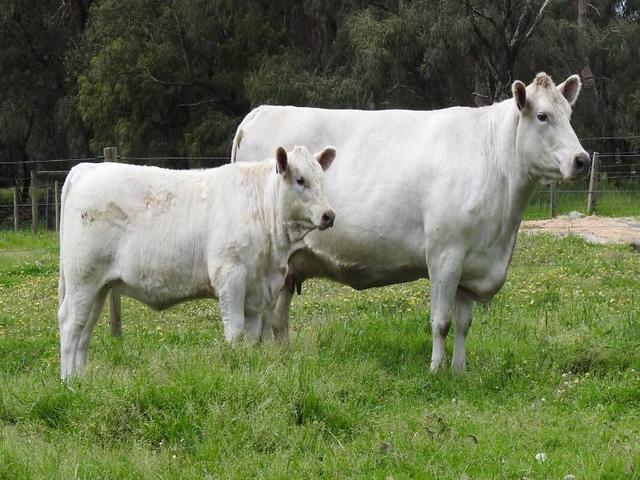
Breed history: The Murray Grey cow is an Australian breed of beef cattle that has gained wide recognition for its outstanding qualities and adaptability. The history of Murray Grey begins in 1905 in the Murray River valley, on the border between New South Wales and Victoria (Australia). According to legend, the first representatives of the breed appeared as a result of an accidental mating between a black Aberdeen Angus bull and a roan Shorthorn cow. The resulting 13 grey-brown calves, initially considered a curiosity, demonstrated rapid growth, high feed conversion, and excellent carcass quality. This attracted the attention of local farmers, and targeted breeding began. In the 1940s, the first large commercial herds were established. In 1962, 50 breeders united to form the Australian Murray Grey Beef Cattle Society. The breed quickly spread across Australia and beyond, with registries today in Canada, New Zealand, the United Kingdom, and the USA. In New Zealand, Murray Grey is particularly valued for its resistance to facial eczema, a problem faced by other breeds. In 1981, a similar breed, the Tasmanian Grey, joined Murray Grey. In the USA, the breed faced difficulties for a time, competing with large continental breeds, but thanks to the efforts of dedicated breeders, it gained popularity, including the emergence of black individuals that expanded its market potential. Exterior: Murray Grey is a medium-sized breed of cows that have a sturdy build and are quite agile. Bulls of this breed are larger than cows. On average, bulls weigh between 780 to 860 kg, although in some cases they can reach weights of up to 1350 kg. Cows weigh between 500 to 700 kg. The color of these animals ranges from light silver to dark grey, with some individuals appearing brown or even black. However, grey is the dominant color, and when crossed with other breeds, the offspring typically inherit the grey coat (hence the name grey cow). In New Zealand, black calves are sometimes born. The head of the Murray Grey is medium-sized, with dark pigmentation on the muzzle. These cows are polled. The body is harmoniously built, with strong musculature, especially in the hindquarters. The limbs of Murray Grey are strong and straight, allowing them to be quite stable and resilient.
Log in to learn more
Sign inWhat to feed
Diet: For adult cows, the main part of the diet consists of high-quality pastures. In pastures, animals receive the necessary nutrients in their natural form. In addition, cows also receive hay, silage, and concentrates such as grains and meal. These feeds vary depending on the season and the physiological condition of the cow. For example, during pregnancy and lactation, the need for nutrients increases, so the amount of concentrates in the diet should be increased to support the health of the cow and the normal development of her offspring. As for calves, in the first months of their lives, they receive milk from their mother, which is the main source of nutrition and provides them with the necessary substances for growth and development. Gradually, as they grow, concentrates and hay are introduced into the diet so that the calf can adapt to more solid food. For bulls that are being fattened, the diet should be particularly high in energy. This is necessary to ensure rapid weight gain and achieve good results in fattening. In this case, feed additives rich in carbohydrates and proteins are important so that the bulls quickly gain weight and develop according to the requirements of meat productivity.
Physical parameters
Male Weight: 780–860 kg
Female weight: 500–700 kg
Habitat Range
Australia
Indonesia
Malaysia
New Zealand
Thailand
United Kingdom
United States
Frequently Asked Questions
How much does Murray Grey weigh?
Adult animal: male — 780–860 kg, female — 500–700 kg.
Where does Murray Grey come from?
Country of origin — Australia.
Where is Murray Grey bred?
The breed is common in: Australia, Indonesia, Malaysia, New Zealand, Thailand, United Kingdom, United States.
What should Murray Grey be fed?
Diet: For adult cows, the main part of the diet consists of high-quality pastures.
Q&A
No questions yet. Ask the first!
Log in to ask a question