
















































Gayaal — buy or sell


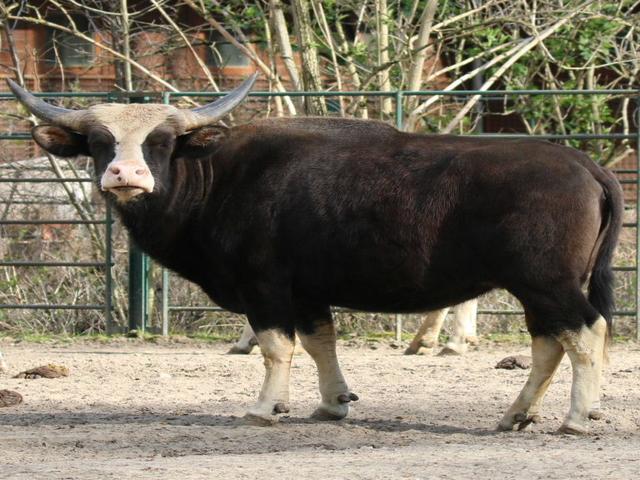
History of the breed. Gaya, the largest representative of bulls, is a domesticated form of the wild gaur. The habitat of the gaur is very extensive: India, Bangladesh, Pakistan, Vietnam, Malaysia, China, so it is difficult to say exactly where the gaur was first domesticated. Gaya was defined as a separate species only in 1968. As a result of domestication, the Gaya has changed significantly: it has become smaller, much lighter, and weaker than the gaur. The body of the Gaya differs from that of the gaur; it has decreased in size. Currently, Gaya are bred in India. Gaya is a meat breed, the meat is very tasty, and the milk is characterized by special fat content. Gaya are also used for agricultural purposes as draft animals. In South Asia, Gaya are used as a currency equivalent; Gaya symbolize wealth, the more heads, the richer the owner. The Gaya is considered a sacred animal and is also used for sacrifices. The lifespan of Gaya is 15-20 years. Exterior. The coat is mainly black, with a brown or blue sheen, and the tail and limbs are white. The hair is short, dense, and shiny. The head of the Gaya is very large, the forehead is wide, the horns are thick and conical, the eyes are deeply set and small, and the ears are sharp and upright. The build is medium, with a weight of up to 500-600 kg, a body length of 3 m, and a height at the withers of 1.5-1.6 m, with a small hump, and short limbs. The build of the Gaya is quite large and massive, the appearance is rather intimidating; however, the temperament of the Gaya is calm, and it quickly becomes accustomed to human contact. Conditions of keeping. The Gaya, like its wild relative, prefers to graze in open areas; Gaya cannot be kept like ordinary cattle in pens. Gaya are released to graze in evergreen forests, clearings, bamboo jungles, and grassy plains with shrub thickets. Gaya graze early in the morning and in the evening, and at night they prefer to refrain from any movement. Gaya will never enter impenetrable thickets of the forest in the dark; they instinctively avoid swamps. If it is necessary to catch a Gaya, salt is scattered, as individuals love to indulge in salt. Gaya easily come into contact with people and can graze peacefully on plains near human settlements. They have a calm temperament, are undemanding in food, love water bodies, and require a larger amount of water. Direction. Gaya is a meat breed; currently, Gaya are bred for meat.
Log in to learn more
Sign inWhat to feed
Diet. Gayals graze in pastures, glades, jungles, and plains, and they love evergreen forests. Gayals are not picky about food; they eat grass, bamboo, branches, tree bark, and leaves. Zoologists note 190 species of plants that Gayals consume. Gayals love water and enjoy splashing in bodies of water, but they are afraid of swamps and avoid them. People feed Gayals with grass and salt, which serves as bait for individuals and binds the Gayal to humans.
Physical parameters
Male Weight: 500–600 kg
Female weight: 400–500 kg
Male height: 150–160 cm
Female height: 130–150 cm
Habitat Range
Bangladesh
China
India
Malaysia
Pakistan
Vietnam
Frequently Asked Questions
How much does Gayaal weigh?
Adult animal: male — 500–600 kg, female — 400–500 kg.
How tall is Gayaal?
Height at the withers: male — 150–160 cm, female — 130–150 cm.
Where does Gayaal come from?
Country of origin — India.
Where is Gayaal bred?
The breed is common in: Bangladesh, China, India, Malaysia, Pakistan, Vietnam.
What should Gayaal be fed?
Diet.
Q&A
No questions yet. Ask the first!
Log in to ask a question