































Kerry — iibso ama iibi



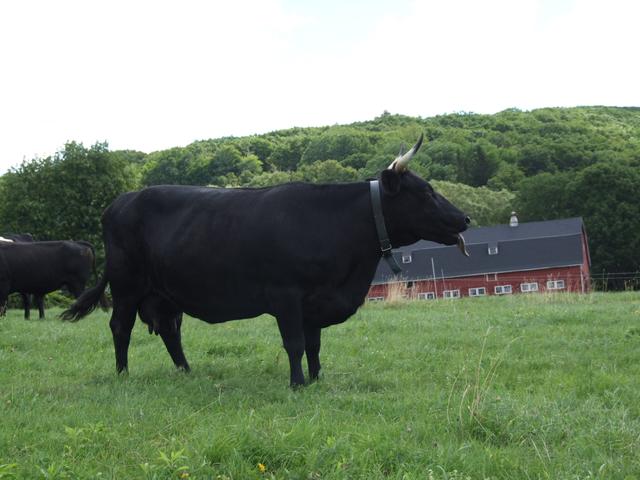
Breed history: Kerry, or Buinin, is known as one of the oldest breeds of cattle in Europe. Its origins trace back to the Neolithic period when the ancestors of the breed were brought to Ireland. The name is associated with County Kerry, where these cows were particularly common. It is believed to be one of the first breeds raised for milk, unlike other breeds that were primarily used for work or meat. Until the 17th century, Kerry was popular in Ireland, but with the development of other breeds, its numbers began to decline. Purebred Kerry survived thanks to the impoverished areas of southwestern Ireland, where their hardiness made them a valuable resource. In the 19th century, the breed nearly disappeared, but conservation measures taken by the Irish government allowed its population to recover. Exterior: The Kerry cow is characterized by a small size and elegant build. Their fine bone structure emphasizes their belonging to the dairy type. Their coat color is almost entirely black, with possible small light markings, most often found in the udder area. The black color gives these cows an elegant and distinctive appearance. The horns of Kerry are whitish, with noticeable dark tips, adding to their refinement. However, in modern farms, the horns of most animals are often removed for safety during management. The appearance of these animals makes them recognizable among other breeds: slender, neat, and graceful, they symbolize adaptation to their role as a dairy breed. A cow weighs 350-430 kg, while a bull weighs from 453 kg and more. The height at the withers for a cow is 122 cm, and for a bull, it is 130 cm. Housing conditions: Kerry is a cow that adapts well to challenging housing conditions, which has earned it recognition among farmers working in regions with harsh climates. This breed was historically bred and successfully used in the southwestern part of Ireland, where its endurance and hardiness became key advantages. The cold, windy, and humid climate of these lands did not hinder the productivity of Kerry. In winter, cows grow thick fur to withstand low temperatures and protect themselves from moisture. The lightness and agility of Kerry distinguish them favorably from larger breeds. Due to their small weight, they not only move easily across rough terrain but also take the bare minimum from pastures.
Gal si aad wax badan u ogaato
Soo galMaxaa lagu quudiyaa
Diet: Kerry is an unpretentious breed capable of surviving on sparse feed. Unlike Holsteins, Kerry cows produce as much milk as the latter even when not fed very well. They primarily feed on grasses from pastures. However, their diet should be rich in energy and nutrients, which they mainly obtain from pastures. During periods of drought or when pasture quality declines, additional feeding may be required.
Sifooyinka jireed
Miisaanka labka: 450–700 kg
Miisaanka dheddigga: 350–430 kg
Dhererka labka: 120–130 cm
Dhererka dheddigga: 110–122 cm
Deegaanka uu ku nool yahay
Ayrlaand
Boqortooyada Midowday
Kanada
Maraykanka
Su'aalaha inta badan la isweydiiyo
Intee ayuu miisaamaa Kerry?
Xayawaan qaangaar ah: lab — 450–700 kg, dhedig — 350–430 kg.
Waa imisa dhererka Kerry?
Dhererka garbaha: lab — 120–130 cm, dhedig — 110–122 cm.
Xaggee ayuu ka soo jeedaa Kerry?
Waddanka asalka ah — Ayrlaand.
Halkee lagu dhaqaa Kerry?
Noocan waxaa laga helaa: Ayrlaand, Boqortooyada Midowday, Kanada, Maraykanka.
Maxaa lagu quudiyaa Kerry?
Diet: Kerry is an unpretentious breed capable of surviving on sparse feed.
Su'aal iyo jawaab
Weli su'aalo ma jiraan. Weydii kan ugu horreeya!
Soo gal si aad su'aal u weydiiso