





























Vatusi — iibso ama iibi

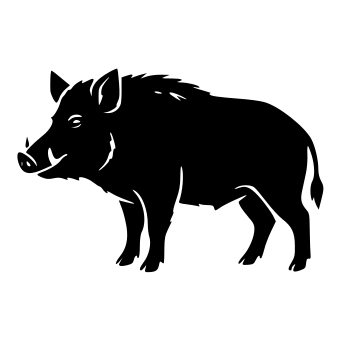

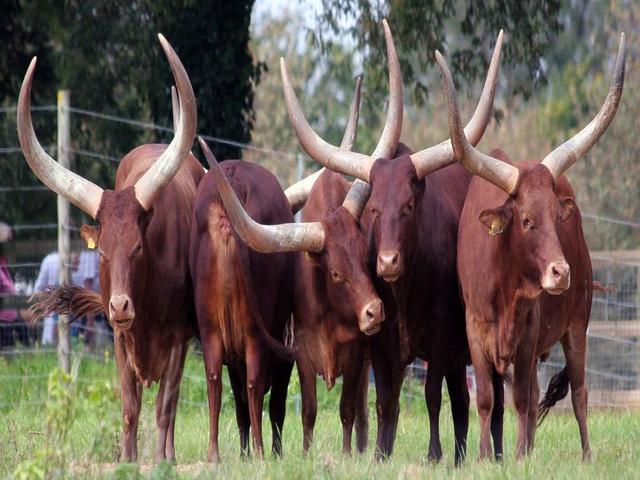
The history of the Watusi breed. Watusi, or Ankole-Watusi, is the oldest African breed of cattle, also known as "Bulls of the Kings." This breed is considered very beautiful and exotic, with a powerful body and large horns that are admired by many. A Watusi bull named Latch was entered into the Guinness World Records on May 6, 2003; his horns weighed 50 kg each and had a circumference of 92-93 cm. Individuals of this breed are also used as exhibits for shows. Watusi were considered sacred animals by many tribes in Africa. African tribes used individuals of this breed as a monetary equivalent to purchase necessary means for survival. Watusi symbolize wealth and prosperity for African peoples. The name "Watusi" is similar to the name of the African people Tutsi; neighboring Ugandan and Angolan tribes, Nkole, prefer to call this breed Ankole, and the double name Ankole-Watusi can also be encountered. Watusi is considered a meat breed, and there are several versions of its origin. According to one version, the history of the Watusi breed spans about 6000 years, with the Watusi being descended from a relic wild bull. Based on another version, this breed appeared approximately 4000 years ago through the crossing of wild aurochs, Egyptian cows, and humpbacked zebu cows. Images of long-horned cows have been found on Egyptian pyramids and in ancient African rock paintings. Research shows traces of zebu, wild aurochs, and Egyptian cows in the genes of Watusi. They were exported to the USA in 1960 and currently inhabit countries in North and South America, Africa, Europe, and Australia. Exterior. Watusi have enormous majestic horns weighing up to 45-50 kg and measuring 1.4-3.7 meters in length, which serve for thermoregulation in extreme heat and protection from predators. The body structure of the Watusi breed is very strong, with a medium-sized torso, long legs, and a small hump like that of the Zebu breed. The short muscular neck allows for the support of heavy horns, and there is a flap of skin under the head called a dewlap. The height at the withers can reach 170 cm, and the body length is 260 cm. Watusi have reddish, dark brown, or black coats, with males being darker than females; they may have white spots on a solid background. The weight of newborn Watusi calves usually ranges from 13 kg to 22 kg, with cows weighing up to 400-500 kg and bulls up to 700-800 kg. Watusi are not particularly suitable for milk production; however, the quality of the meat is excellent, with low fat content and low cholesterol levels.
Gal si aad wax badan u ogaato
Soo galMaxaa lagu quudiyaa
Diet. Vatusi do not receive succulent grass and silage; they find food in meadows and along riverbanks. The basis of their diet consists of roughage, and their digestive system is adapted to the consumption of rough feeds and the intake of water and feed in small quantities. Vatusi are very resilient and have a very strong immune system.
Sifooyinka jireed
Miisaanka labka: 700–800 kg
Miisaanka dheddigga: 400–500 kg
Dhererka labka: 130–170 cm
Dhererka dheddigga: 120–155 cm
Deegaanka uu ku nool yahay
Angoola
Awstaraaliya
Baraasiil
Baraguaay
Botuswaana
Burundi
Jaad
Jamhuuriyadda Afrikada Dhexe
Jamhuuriyadda Dimuquraadiga Kongo
Jili
Koonfur Suudaan
Maali
Meksiko
Namiibiya
Nauru
Nayjer
Simbaabwe
Suudaan
Uruguwaay
Yukrayn
Su'aalaha inta badan la isweydiiyo
Intee ayuu miisaamaa Vatusi?
Xayawaan qaangaar ah: lab — 700–800 kg, dhedig — 400–500 kg.
Waa imisa dhererka Vatusi?
Dhererka garbaha: lab — 130–170 cm, dhedig — 120–155 cm.
Xaggee ayuu ka soo jeedaa Vatusi?
Waddanka asalka ah — Koonfur Afrika.
Halkee lagu dhaqaa Vatusi?
Noocan waxaa laga helaa: Angoola, Awstaraaliya, Baraasiil, Baraguaay, Botuswaana, Burundi, Jaad, Jamhuuriyadda Afrikada Dhexe.
Maxaa lagu quudiyaa Vatusi?
Diet.
Su'aal iyo jawaab
Weli su'aalo ma jiraan. Weydii kan ugu horreeya!
Soo gal si aad su'aal u weydiiso