















































Kostroma cow — 购买或出售





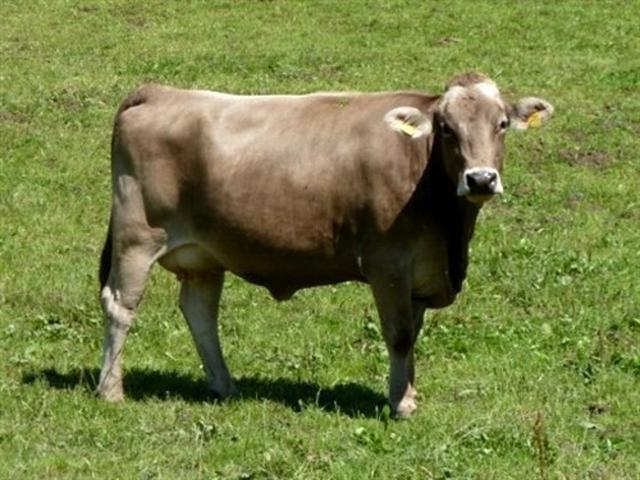
History of the breed: The Kostroma breed of cows is a Russian dual-purpose breed (meat-dairy), excelling in both meat and milk production and characterized by its hardiness in terms of housing conditions. The formation of the Kostroma breed began in the early 20th century in the Kostroma region of Russia. Local improved cattle breeds, such as the Miskovsky and Babaevsky, were used as a foundation, which were crossed with bulls of the Algaus, Swiss, and Ayrshire breeds. In the late 19th century, the crossing of Babaevsky cattle with bulls of the Algaus breed from Southern Germany became an important milestone. Since 1912, Swiss bulls were used to further improve the breed's characteristics. From 1920, this crossing continued on state farms, where Ayrshire bulls were also used. By 1940, the average milk yield in the Karavaevsky state farm reached 6310 kg. On November 27, 1944, the breed was officially recognized by the People's Commissar of Agriculture of the USSR. Today, the purebred population of Kostroma cattle is declining. Exterior: The Kostroma breed of cows is distinguished by its powerful build, which emphasizes its strong constitution. These animals have a harmonious body structure with good live weight. The muscles of the cow are well developed. Externally, Kostroma cows resemble the Swiss breed, but they have a more elongated body and a head with a narrower forehead. The back and loin of these animals are straight and wide, contributing to overall stability and good physical condition. The coloration of the Kostroma breed varies from light gray to dark brown. A characteristic light line along the back is often seen in these animals, giving them a distinctive appearance. The horns of Kostroma cows are small in size. The weight of Kostroma cows ranges from 550 to 650 kg, although some females can weigh up to 850 kg. Bulls typically weigh between 800 and 900 kg, but can sometimes reach 1200-1500 kg. The udder of these cows is voluminous and evenly developed, with a cup-like shape. It is well adapted for milking machines. The udder index is 43-44.5%. Housing conditions: The Kostroma breed of cows is known for its endurance and good adaptation to various climatic conditions, including harsh continental climates. These animals can withstand cold well, making them suitable for keeping in cold regions.
登录以了解更多
登录喂什么
Diet: The main feeds are roughage, such as hay, silage, and fodder beets. Animals are also given concentrated feeds, including grains, compound feed, meals, and cake. The diet includes vegetables such as beets, carrots, and potatoes, especially for young animals. Additionally, an important element is mineral supplements, including salt, calcium, phosphorus, magnesium, and trace elements. The diet must be balanced in minerals and vitamins. It is important to avoid overfeeding with roughage, especially during the dry period - no more than 20 kg of roughage should be given per day. For young animals, it is important to diversify the diet to prevent delays in sexual maturation and ensure normal development.
物理参数
雄性体重: 800–900 公斤
雌性体重: 550–650 公斤
栖息地
乌克兰
俄罗斯
白俄罗斯
常见问题
Kostroma cow有多重?
成年动物:公牛 — 800–900 公斤, 母牛 — 550–650 公斤。
Kostroma cow起源于哪里?
原产国 — 俄罗斯。
Kostroma cow在哪里饲养?
该品种分布于:乌克兰, 俄罗斯, 白俄罗斯。
Kostroma cow吃什么?
Diet: The main feeds are roughage, such as hay, silage, and fodder beets.
问答
还没有问题。第一个提问!
登录 以提问