





Men-Anjou — beli atau jual


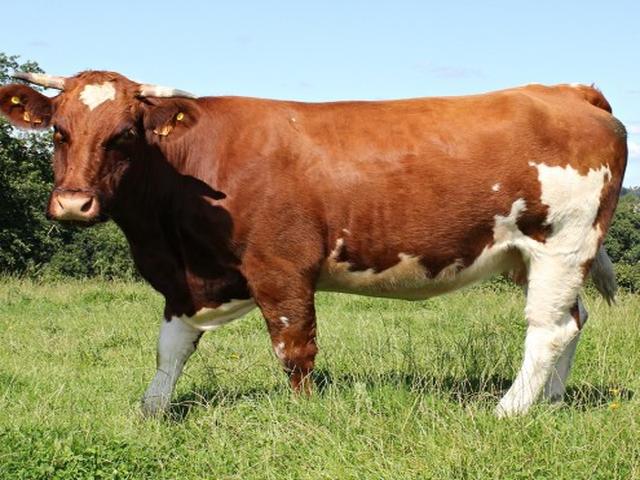
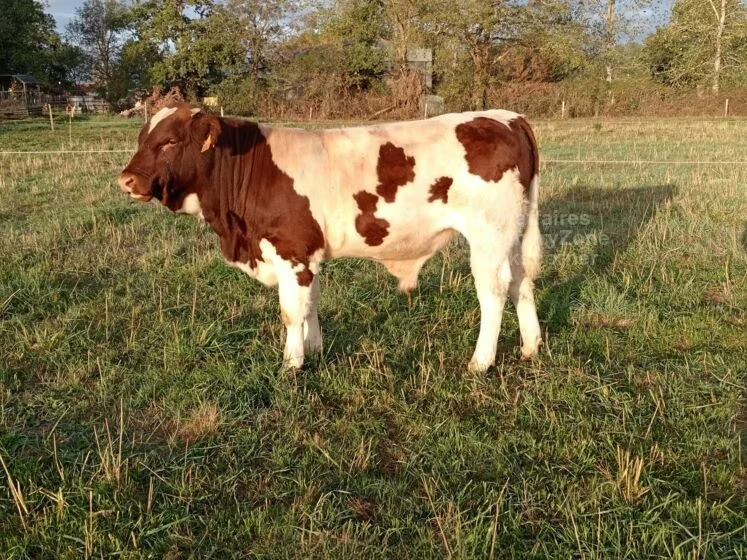
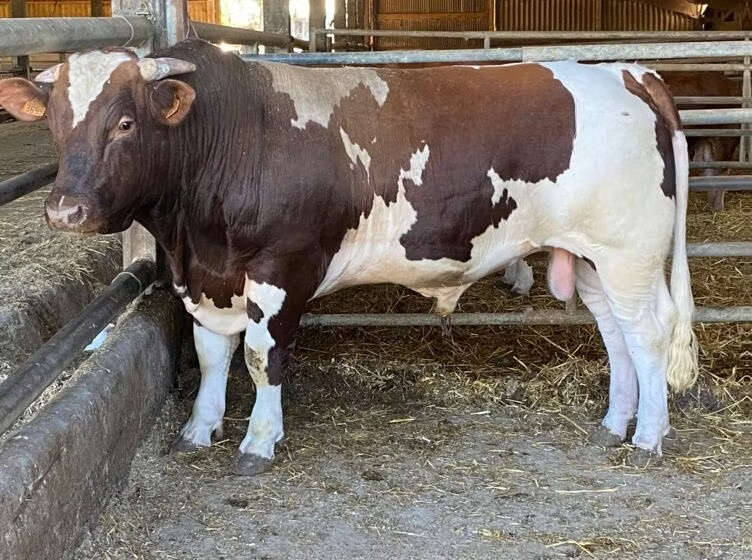
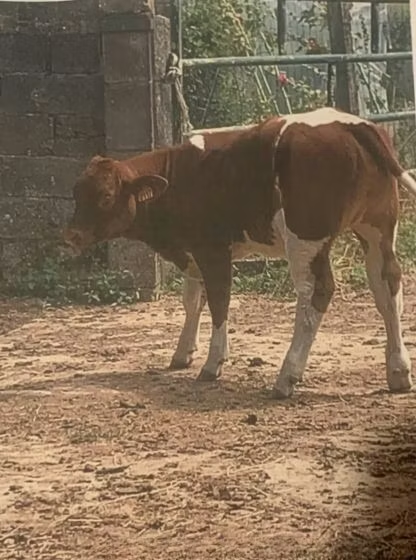
Breed history: The Maine-Anjou breed, now known as Rouge des Prés, represents an impressive chapter in the history of French cattle breeding. Its characteristics, history, and management features make it interesting for both experienced farmers and novice livestock breeders. The history of Maine-Anjou begins in the 19th century in northwestern France, in the historical provinces of Maine and Anjou (the Pays de la Loire region). By the early 19th century, there was already a large, muscular cattle of light red color with white spots in this region – the Mancelle breed. Mancelle was renowned for its ease of fattening. As agronomist Leclere-Thouin wrote in 1843, on the common pastures of the Oge valley, Mancelle "were the last to be turned out to grass, but the first to be chosen for sending to the markets in the capital." In 1839, Count de Falloux, a landowner, imported Shorthorns from England and crossed them with local Mancelle. The result exceeded all expectations. By 1850, hybrids, initially called Durham-Mancelle, were already winning prizes at agricultural exhibitions in France. In 1908, the Shorthorn-Mancelle Breeders' Society was established in Château-Gontier in the Mayenne department. In 1909, the name was changed to the Maine-Anjou Cattle Breeders' Society, reflecting the geographical location of the region. In 2004, the breed received the official name Rouge des Prés in France, although outside of France, the name Maine-Anjou continues to be used. Since the 1970s, the breed's selection has focused on meat production. Exterior: Maine-Anjou is one of the largest breeds in the world, and its representatives have an impressive exterior. Bulls of this breed reach significant weights, usually from 1000 to 1500 kg, with some record holders weighing up to 1700 kg or more. One bull, for example, reached an impressive weight of 1950 kg. On average, Maine-Anjou bulls reach a height at the withers of about 170 cm, giving them a powerful and imposing appearance. The cows of this breed are also not small, although they are slightly smaller than the bulls. Their live weight usually ranges from 850 to 1000 kg, and the average height at the withers is about 140 cm. The color of Maine-Anjou cows is usually red-spotted, but among the breed's representatives, one can also find completely red and black individuals. White spots are often present on the head, belly, hind legs, and tail, giving each animal a unique individuality in coloration.
Log masuk untuk mengetahui lebih lanjut
Log masukApa yang perlu diberi makan
Diet: The feeding of cows of the Men-Anjou breed must be carefully balanced to meet their needs and maintain high productivity. The basis of their diet consists of quality hay, pasture grass, and silage. This food provides the cow with the necessary nutritional foundation and important elements that strengthen health and promote growth and development. In addition to the main feeds, concentrates such as grains and meal are also added to increase the energy value of the diet. Mineral supplements and vitamins become an integral part of the diet, supporting normal metabolism and immunity. During pregnancy and lactation, when the body's needs increase, the amount of feed is increased, and the content of beneficial substances is enhanced so that the cow can not only remain in good condition but also adequately nourish the calf. In the first months of life, calves receive maternal milk, which provides them with all the necessary nutrients for proper development. Over time, quality hay and concentrates are introduced into their diet to help them gradually transition to the main feeds, stimulating growth and strengthening the body.
Parameter fizikal
Berat jantan: 1000–1700 kg
Berat betina: 850–1000 kg
Tinggi jantan: 160–170 cm
Tinggi betina: 130–140 cm
Habitat
Algeria
Amerika Syarikat
Australia
Belgium
Brazil
Jepun
Kanada
New Zealand
Perancis
Soalan lazim
Berapakah berat Men-Anjou?
Haiwan dewasa: jantan — 1000–1700 kg, betina — 850–1000 kg.
Berapakah ketinggian Men-Anjou?
Ketinggian pada paras layu: jantan — 160–170 cm, betina — 130–140 cm.
Dari mana berasal Men-Anjou?
Negara asal — Perancis.
Di mana Men-Anjou diternak?
Baka ini tersebar di: Algeria, Amerika Syarikat, Australia, Belgium, Brazil, Jepun, Kanada, New Zealand.
Apa yang perlu diberi makan kepada Men-Anjou?
Diet: The feeding of cows of the Men-Anjou breed must be carefully balanced to meet their needs and maintain high productivity.
Soal jawab
Belum ada soalan. Ajukan soalan pertama!
Log masuk untuk bertanya
Iklan di wilayah anda