







Holstein breed — beli atau jual


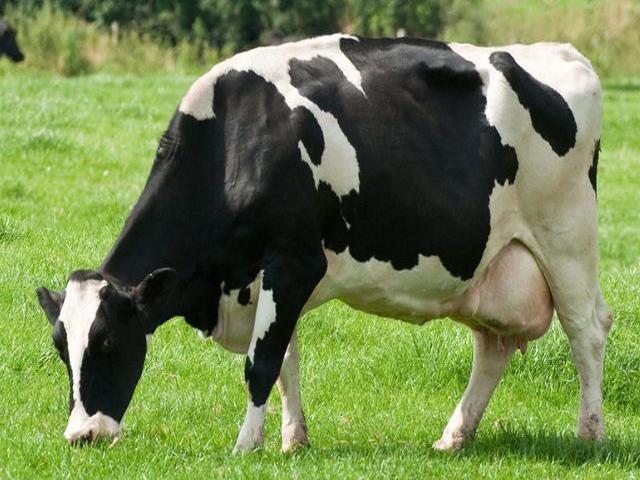
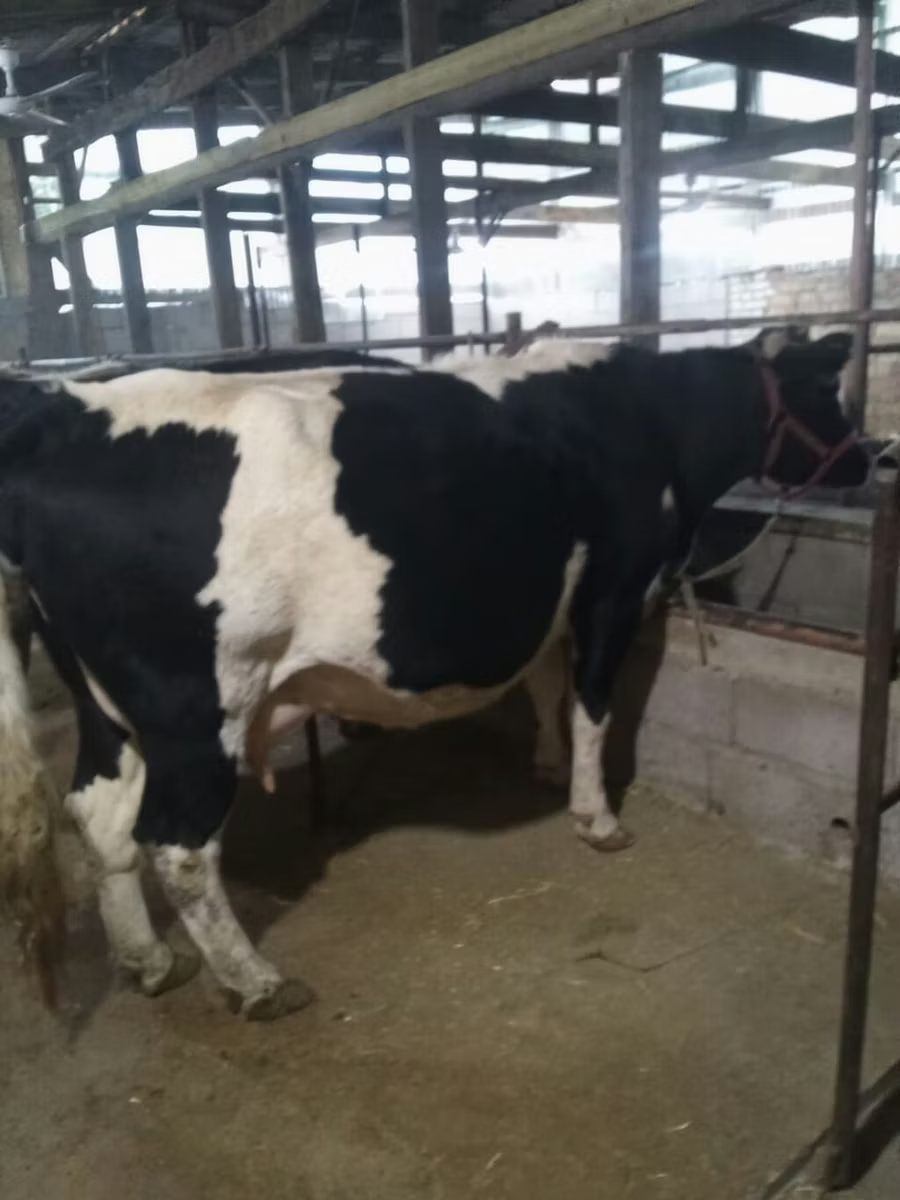
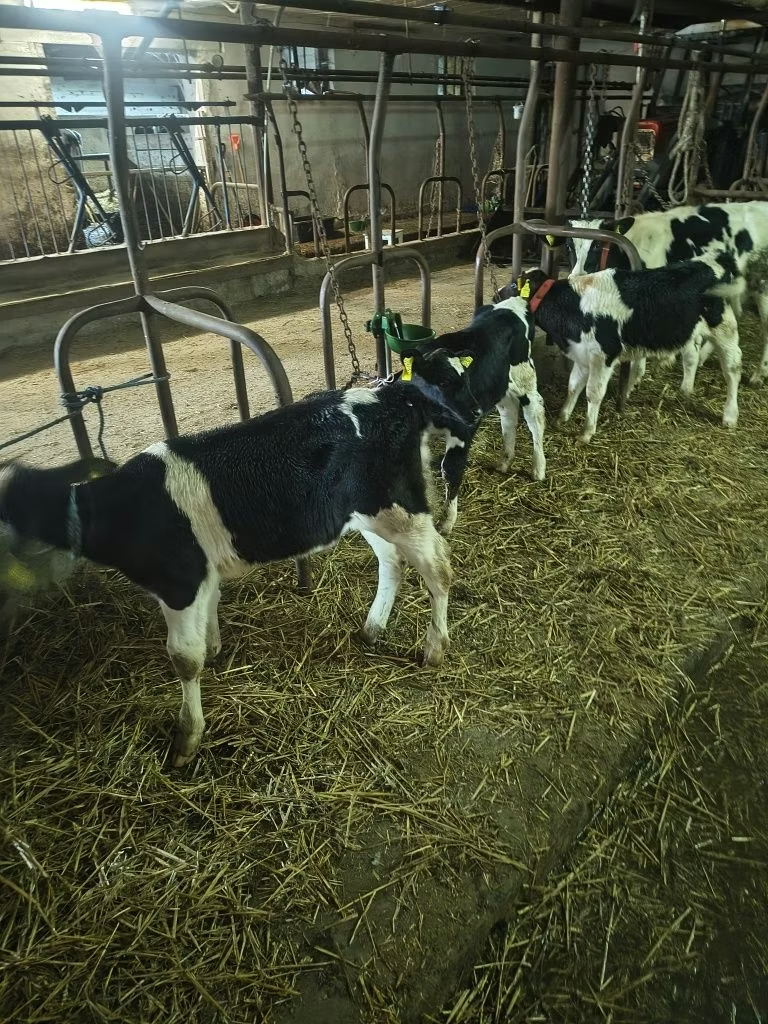
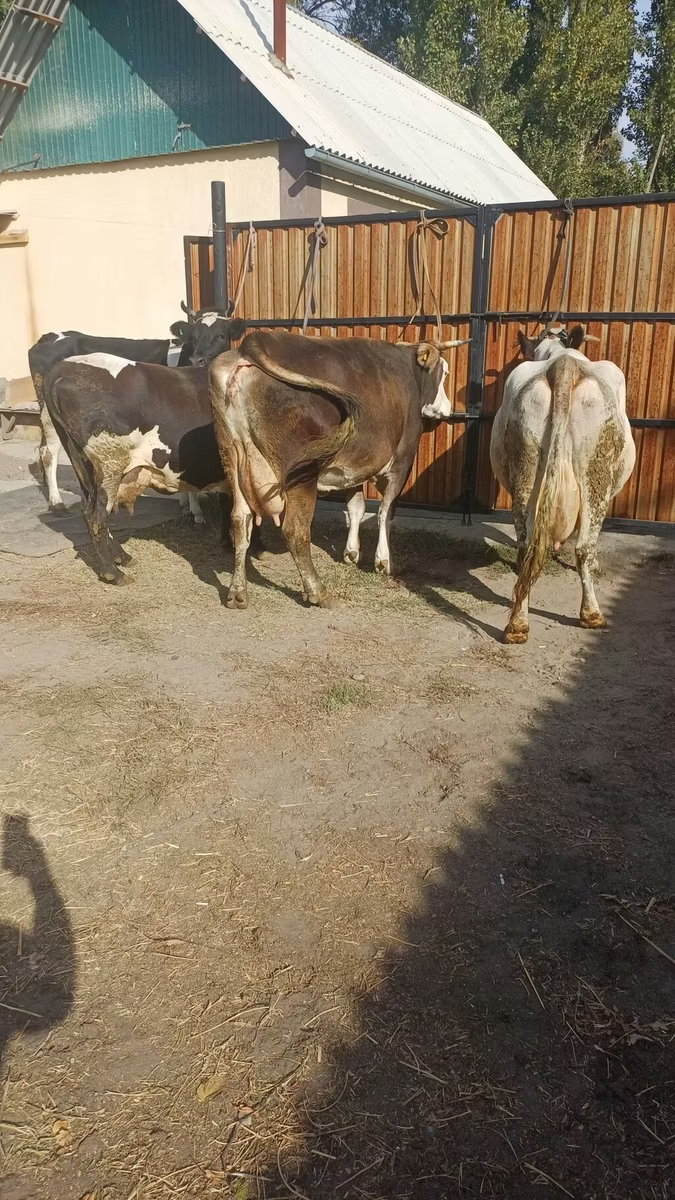
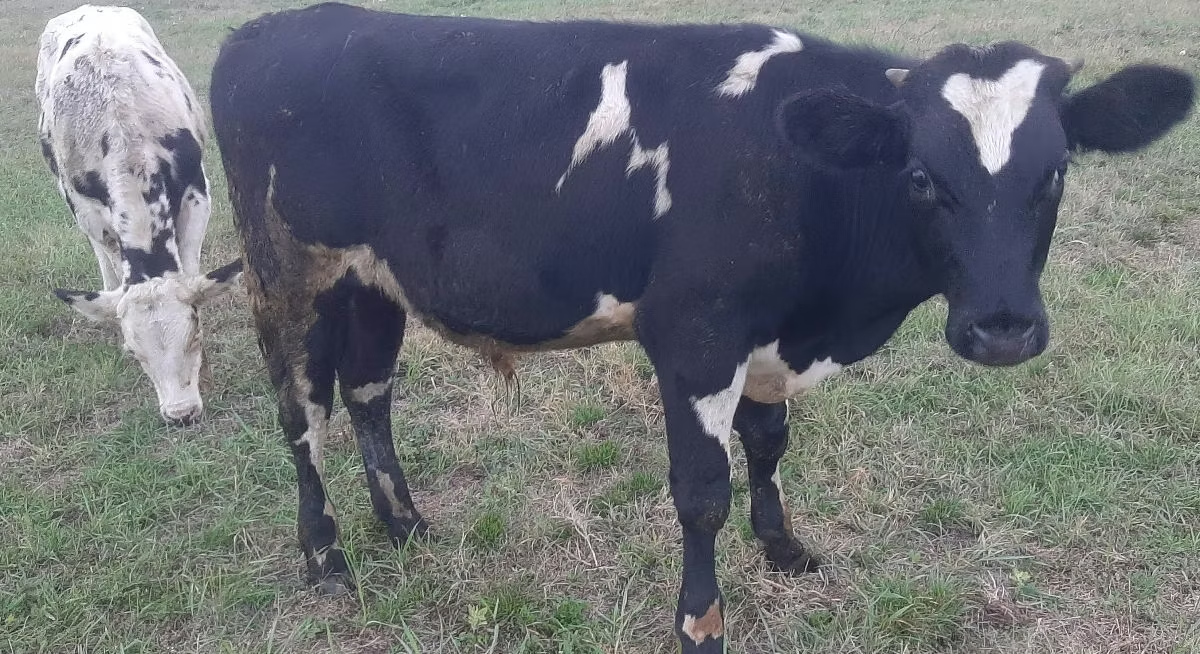
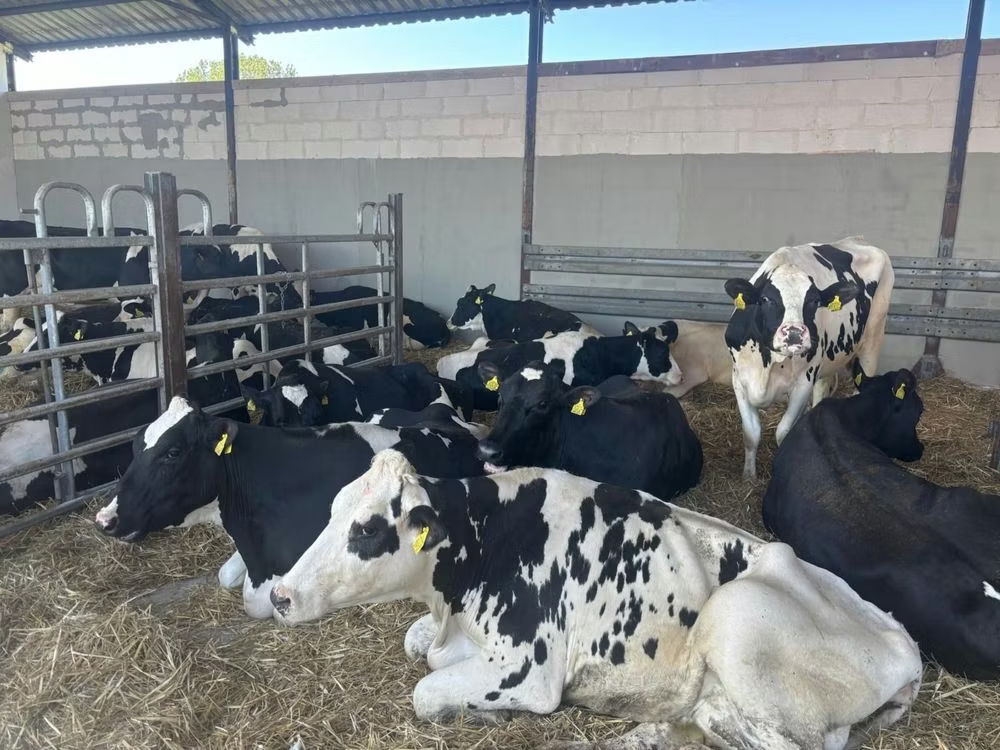
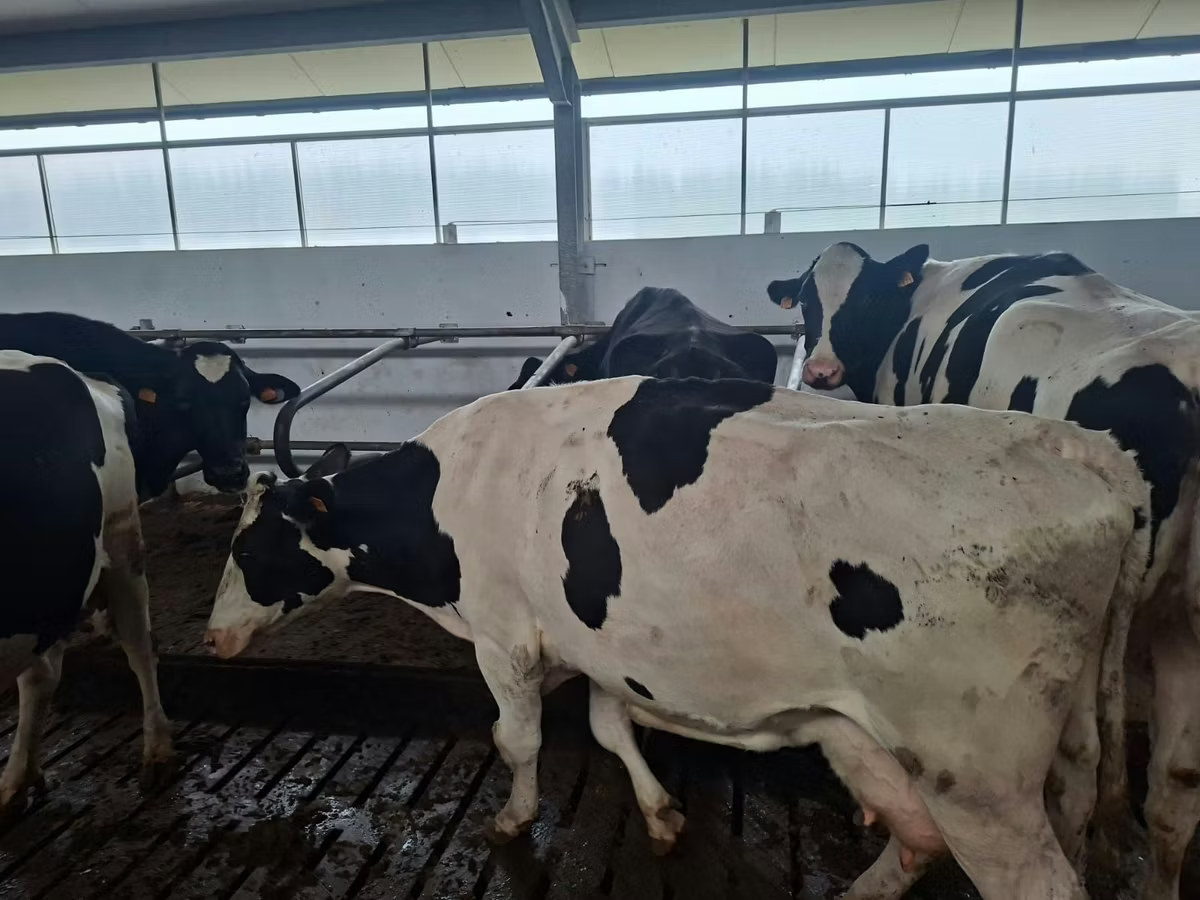
History of the Holstein breed. The homeland of Holsteins is the Netherlands. According to historical data, the breed originated before our era, when the light cattle of the Frisian tribes living in the territory of present-day northern Holland mixed with the black cows of German settlers. The mixture of German and Frisian cows gave rise to this breed. The endurance, strong immunity, and hardiness in feed characteristic of Frisian cattle were combined with the high milk qualities of German cattle. The black-and-white individuals resulting from this crossbreeding are the ancestors of Holsteins. The lands of the Netherlands were ideally suited for growing forage grasses, which the locals cultivated, producing cheese and butter for many centuries. In Friesland (a Dutch province) in the 17th century, Holsteins were kept for both milk and meat production. This approach was also adopted by most livestock breeders in other countries. Over time, black-and-white cattle were exported to many European countries. In the 19th century, cattle from Holland first arrived in the USA. Their neat appearance, high productivity, and, most importantly, the taste of the milk won the affection of American livestock breeders and beyond. The Holstein-Friesian Breeders Association was established on March 15, 1871, founded by Winthrop Chenery. Breeders in the USA and Canada focused on the conformation of the animals and the milk productivity of black-and-white cattle, and it can be said that they achieved the desired results. Since the selection was carried out within the breed, Americans are considered the pure Holsteins. In 1872, the first edition of the Holstein-Friesian breed herd book was published. By that time, cattle were already being bred in full force in 12 states of the USA. The popularity of Holsteins rapidly increased when, in 1887, a cow of this breed named Klattilda won the highest milk yield competition. In 1885, the Holstein-Friesian Association of the USA began its work, and soon Holstein cattle became the most popular in the USA, eventually gaining supremacy worldwide. An important role in the spread of Holsteins was played by the method of artificial insemination, which began to be actively used in the 1960s and had a huge impact on the genetic improvement of the breed. Exterior. The exclusively black-and-white coloration is the standard of this breed. Black spots of various sizes and shapes can cover 2/3 of the entire surface of the skin; less commonly, black Holsteins with solitary white spots on their legs and tails are found.
Log masuk untuk mengetahui lebih lanjut
Log masukApa yang perlu diberi makan
Ration. The Holstein breed is quite demanding when it comes to feeding. To realize their milk potential, these animals must have a balanced diet, drink plenty of water, and minimize factors that cause discomfort. In the feed trough of Holsteins, one can see hay, silage, crushed barley, feed beets, sunflower and soybean meal, clover, alfalfa, lupine, and peas. Cows should only be given water that is not cold. Per day, an animal drinks about 50 liters of liquid, and during the lactation period, the need for water doubles. As for silage, it causes disputes among specialists. Some experts do not recommend adding it to the diet of Holsteins, explaining that the product contains many pathogenic bacteria and can provoke the development of mastitis and inflammatory processes in the reproductive system. However, many livestock breeders still provide corn silage. Heifers and dry cows are fed 2-3 times a day. The dry period lasts no less than 45 and no more than 65 days; a week before calving, cows are no longer given silage and haylage—this is very important to avoid cases of abortion. In the first days after calving, it is recommended to give cows dry hay.
Parameter fizikal
Berat jantan: 900–1000 kg
Berat betina: 700–800 kg
Tinggi jantan: 140–160 cm
Tinggi betina: 130–150 cm
Habitat
Afghanistan
Afrika Selatan
Albania
Algeria
Amerika Syarikat
Andorra
Angola
Anguilla
Antigua dan Barbuda
Arab Saudi
Argentina
Armenia
Aruba
Australia
Austria
Azerbaijan
Bahamas
Bahrain
Bangladesh
Barbados
Belanda
Belanda Caribbean
Belarus
Belgium
Belize
Benin
Bermuda
Bhutan
Bolivia
Bosnia dan Herzegovina
Botswana
Brazil
Brunei
Bulgaria
Burkina Faso
Burundi
Cameroon
Cape Verde
Chad
Chile
China
Colombia
Comoros
Congo - Brazzaville
Congo - Kinshasa
Costa Rica
Cote d’Ivoire
Croatia
Cuba
Curacao
Cyprus
Czechia
Denmark
Djibouti
Dominica
Ecuador
El Salvador
Emiriah Arab Bersatu
Estonia
Eswatini
Ethiopia
Fiji
Filipina
Finland
Gabon
Gambia
Georgia
Ghana
Gibraltar
Greece
Greenland
Grenada
Guadeloupe
Guam
Guatemala
Guernsey
Guiana Perancis
Guinea
Guinea Bissau
Guinea Khatulistiwa
Guyana
Haiti
Honduras
Hong Kong SAR China
Hungary
Iceland
India
Indonesia
Iran
Iraq
Ireland
Isle of Man
Israel
Itali
Jamaica
Jepun
Jerman
Jersey
Jordan
Kanada
Kazakhstan
Kemboja
Kenya
Kepulauan Aland
Kepulauan Cayman
Kepulauan Cook
Kepulauan Faroe
Kepulauan Mariana Utara
Kepulauan Marshall
Kepulauan Solomon
Kepulauan Turks dan Caicos
Kepulauan Virgin A.S.
Kepulauan Virgin British
Kiribati
Korea Selatan
Korea Utara
Kosovo
Kuwait
Kyrgyzstan
Laos
Latvia
Lesotho
Liberia
Libya
Liechtenstein
Lithuania
Lubnan
Luxembourg
Macau SAR China
Macedonia Utara
Madagaskar
Maghribi
Malawi
Malaysia
Maldives
Mali
Malta
Martinique
Mauritania
Mauritius
Mayotte
Mesir
Mexico
Micronesia
Moldova
Monaco
Mongolia
Montenegro
Mozambique
Myanmar (Burma)
Namibia
Nauru
Nepal
New Caledonia
New Zealand
Nicaragua
Niger
Nigeria
Norway
Oman
Pakistan
Palau
Panama
Papua New Guinea
Paraguay
Perancis
Peru
Poland
Polinesia Perancis
Portugal
Puerto Rico
Qatar
Republik Afrika Tengah
Republik Dominica
Reunion
Romania
Rusia
Rwanda
Sahara Barat
Saint Kitts dan Nevis
Saint Lucia
Saint Martin
Saint Vincent dan Grenadines
Samoa
Samoa Amerika
San Marino
Sao Tome dan Principe
Senegal
Sepanyol
Serbia
Seychelles
Sierra Leone
Singapura
Sint Maarten
Slovakia
Slovenia
Somalia
Sri Lanka
Sudan
Sudan Selatan
Surinam
Sweden
Switzerland
Syria
Taiwan
Tajikistan
Tanzania
Thailand
Timor-Leste
Togo
Tonga
Trinidad dan Tobago
Tunisia
Turkiye
Turkmenistan
Tuvalu
Uganda
Ukraine
United Kingdom
Uruguay
Uzbekistan
Vanuatu
Venezuela
Vietnam
Wallis dan Futuna
Wilayah Palestin
Yaman
Zambia
Zimbabwe
Soalan lazim
Berapakah berat Holstein breed?
Haiwan dewasa: jantan — 900–1000 kg, betina — 700–800 kg.
Berapakah ketinggian Holstein breed?
Ketinggian pada paras layu: jantan — 140–160 cm, betina — 130–150 cm.
Dari mana berasal Holstein breed?
Negara asal — Belanda.
Di mana Holstein breed diternak?
Baka ini tersebar di: Afghanistan, Afrika Selatan, Albania, Algeria, Amerika Syarikat, Andorra, Angola, Anguilla.
Apa yang perlu diberi makan kepada Holstein breed?
Ration.
Soal jawab
Belum ada soalan. Ajukan soalan pertama!
Log masuk untuk bertanya
Iklan di wilayah anda