
















Holstein breed — buy or sell



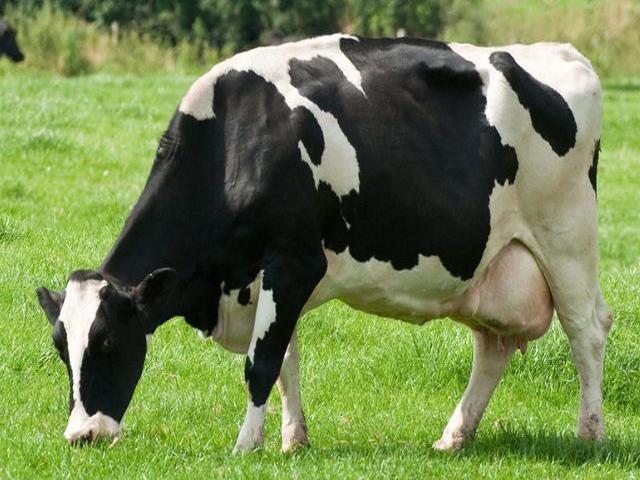
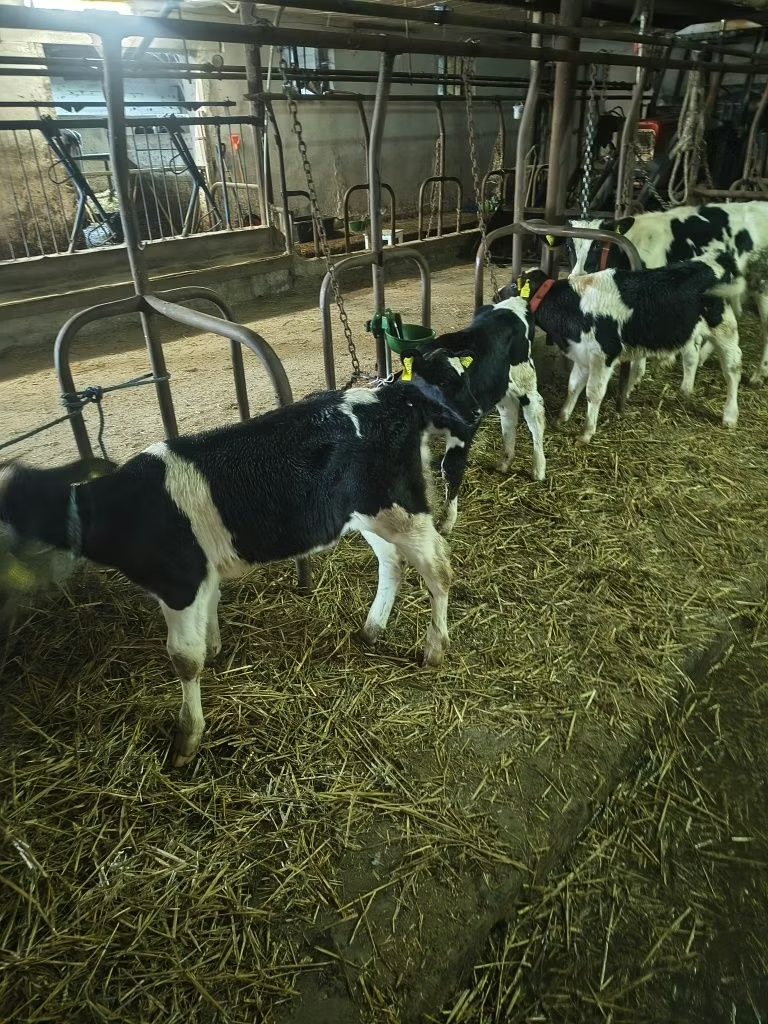
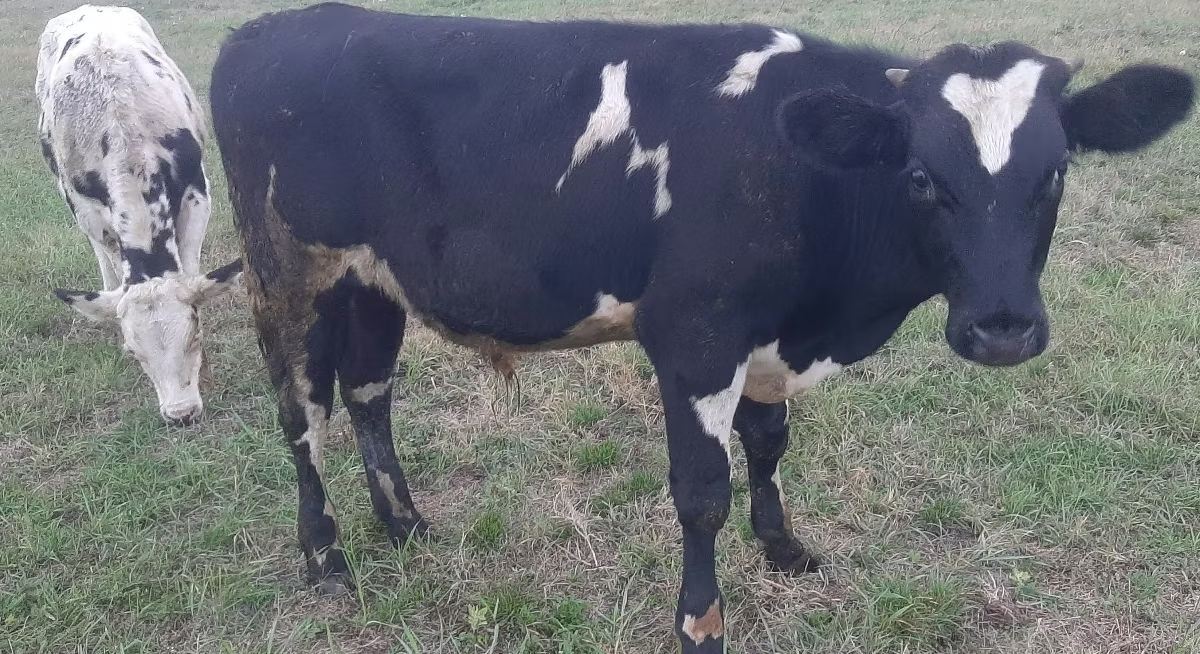
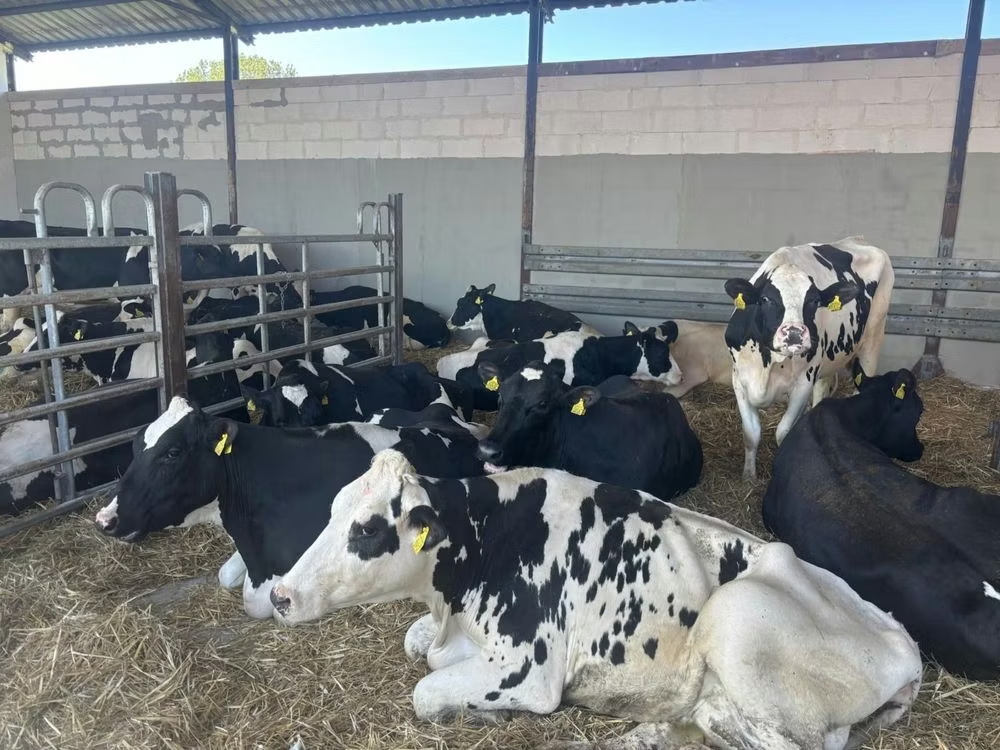
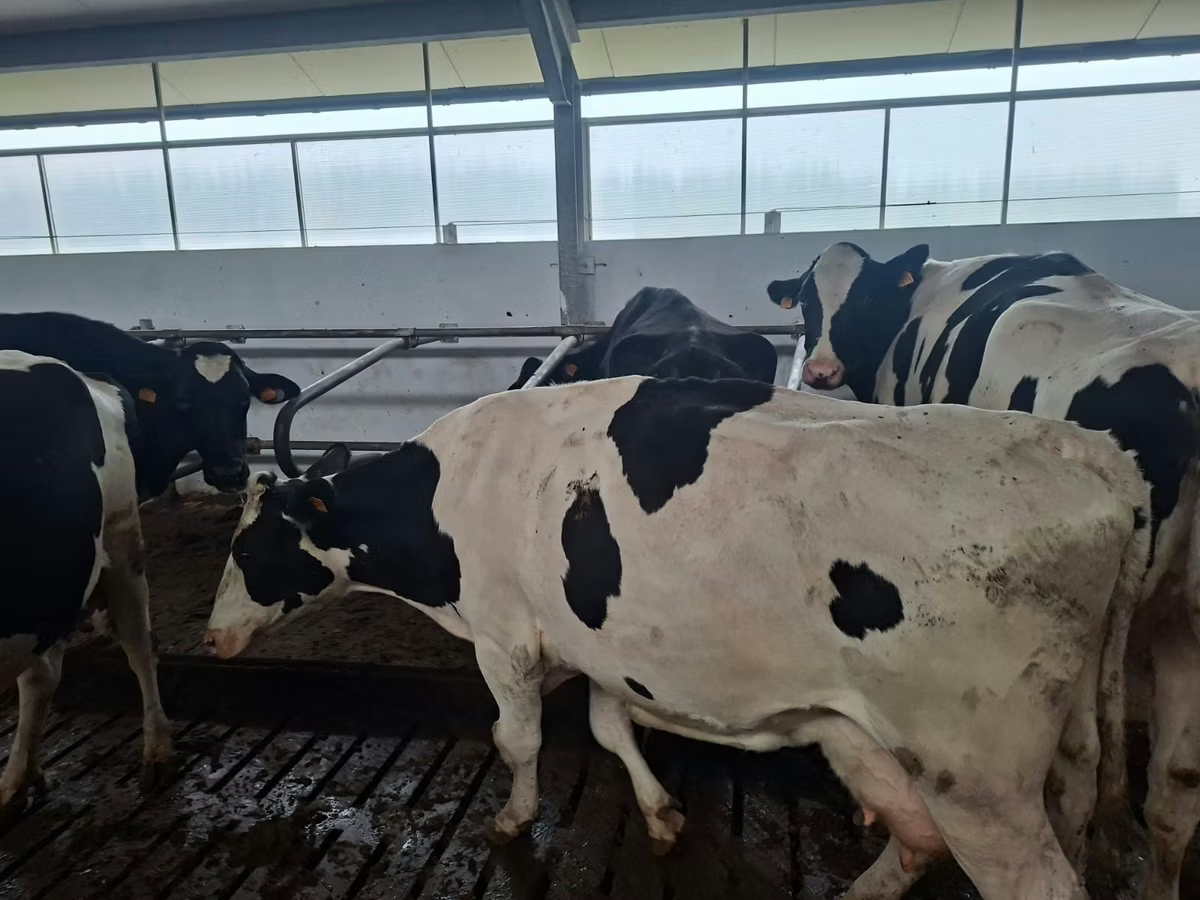
History of the Holstein breed. The homeland of Holsteins is the Netherlands. According to historical data, the breed originated before our era, when the light cattle of the Frisian tribes living in the territory of present-day northern Holland mixed with the black cows of German settlers. The mixture of German and Frisian cows gave rise to this breed. The endurance, strong immunity, and hardiness in feed characteristic of Frisian cattle were combined with the high milk qualities of German cattle. The black-and-white individuals resulting from this crossbreeding are the ancestors of Holsteins. The lands of the Netherlands were ideally suited for growing forage grasses, which the locals cultivated, producing cheese and butter for many centuries. In Friesland (a Dutch province) in the 17th century, Holsteins were kept for both milk and meat production. This approach was also adopted by most livestock breeders in other countries. Over time, black-and-white cattle were exported to many European countries. In the 19th century, cattle from Holland first arrived in the USA. Their neat appearance, high productivity, and, most importantly, the taste of the milk won the affection of American livestock breeders and beyond. The Holstein-Friesian Breeders Association was established on March 15, 1871, founded by Winthrop Chenery. Breeders in the USA and Canada focused on the conformation of the animals and the milk productivity of black-and-white cattle, and it can be said that they achieved the desired results. Since the selection was carried out within the breed, Americans are considered the pure Holsteins. In 1872, the first edition of the Holstein-Friesian breed herd book was published. By that time, cattle were already being bred in full force in 12 states of the USA. The popularity of Holsteins rapidly increased when, in 1887, a cow of this breed named Klattilda won the highest milk yield competition. In 1885, the Holstein-Friesian Association of the USA began its work, and soon Holstein cattle became the most popular in the USA, eventually gaining supremacy worldwide. An important role in the spread of Holsteins was played by the method of artificial insemination, which began to be actively used in the 1960s and had a huge impact on the genetic improvement of the breed. Exterior. The exclusively black-and-white coloration is the standard of this breed. Black spots of various sizes and shapes can cover 2/3 of the entire surface of the skin; less commonly, black Holsteins with solitary white spots on their legs and tails are found.
Log in to learn more
Sign inWhat to feed
Ration. The Holstein breed is quite demanding when it comes to feeding. To realize their milk potential, these animals must have a balanced diet, drink plenty of water, and minimize factors that cause discomfort. In the feed trough of Holsteins, one can see hay, silage, crushed barley, feed beets, sunflower and soybean meal, clover, alfalfa, lupine, and peas. Cows should only be given water that is not cold. Per day, an animal drinks about 50 liters of liquid, and during the lactation period, the need for water doubles. As for silage, it causes disputes among specialists. Some experts do not recommend adding it to the diet of Holsteins, explaining that the product contains many pathogenic bacteria and can provoke the development of mastitis and inflammatory processes in the reproductive system. However, many livestock breeders still provide corn silage. Heifers and dry cows are fed 2-3 times a day. The dry period lasts no less than 45 and no more than 65 days; a week before calving, cows are no longer given silage and haylage—this is very important to avoid cases of abortion. In the first days after calving, it is recommended to give cows dry hay.
Physical parameters
Male Weight: 900–1000 kg
Female weight: 700–800 kg
Male height: 140–160 cm
Female height: 130–150 cm
Habitat Range
Afghanistan
Albania
Algeria
American Samoa
Andorra
Angola
Anguilla
Antigua & Barbuda
Argentina
Armenia
Aruba
Australia
Austria
Azerbaijan
Bahamas
Bahrain
Bangladesh
Barbados
Belarus
Belgium
Belize
Benin
Bermuda
Bhutan
Bolivia
Bosnia & Herzegovina
Botswana
Brazil
British Virgin Islands
Brunei
Bulgaria
Burkina Faso
Burundi
Cambodia
Cameroon
Canada
Cape Verde
Caribbean Netherlands
Cayman Islands
Central African Republic
Chad
Chile
China
Colombia
Comoros
Congo - Brazzaville
Congo - Kinshasa
Cook Islands
Costa Rica
Croatia
Cuba
Curaçao
Cyprus
Czechia
Côte d’Ivoire
Denmark
Djibouti
Dominica
Dominican Republic
Ecuador
Egypt
El Salvador
Equatorial Guinea
Estonia
Eswatini
Ethiopia
Faroe Islands
Fiji
Finland
France
French Guiana
French Polynesia
Gabon
Gambia
Georgia
Germany
Ghana
Gibraltar
Greece
Greenland
Grenada
Guadeloupe
Guam
Guatemala
Guernsey
Guinea
Guinea-Bissau
Guyana
Haiti
Honduras
Hong Kong SAR China
Hungary
Iceland
India
Indonesia
Iran
Iraq
Ireland
Isle of Man
Israel
Italy
Jamaica
Japan
Jersey
Jordan
Kazakhstan
Kenya
Kiribati
Kosovo
Kuwait
Kyrgyzstan
Laos
Latvia
Lebanon
Lesotho
Liberia
Libya
Liechtenstein
Lithuania
Luxembourg
Macao SAR China
Madagascar
Malawi
Malaysia
Maldives
Mali
Malta
Marshall Islands
Martinique
Mauritania
Mauritius
Mayotte
Mexico
Micronesia
Moldova
Monaco
Mongolia
Montenegro
Morocco
Mozambique
Myanmar (Burma)
Namibia
Nauru
Nepal
Netherlands
New Caledonia
New Zealand
Nicaragua
Niger
Nigeria
North Korea
North Macedonia
Northern Mariana Islands
Norway
Oman
Pakistan
Palau
Palestinian Territories
Panama
Papua New Guinea
Paraguay
Peru
Philippines
Poland
Portugal
Puerto Rico
Qatar
Romania
Russia
Rwanda
Réunion
Samoa
San Marino
Saudi Arabia
Senegal
Serbia
Seychelles
Sierra Leone
Singapore
Sint Maarten
Slovakia
Slovenia
Solomon Islands
Somalia
South Africa
South Korea
South Sudan
Spain
Sri Lanka
St. Kitts & Nevis
St. Lucia
St. Martin
St. Vincent & Grenadines
Sudan
Suriname
Sweden
Switzerland
Syria
São Tomé & Príncipe
Taiwan
Tajikistan
Tanzania
Thailand
Timor-Leste
Togo
Tonga
Trinidad & Tobago
Tunisia
Turkmenistan
Turks & Caicos Islands
Tuvalu
Türkiye
U.S. Virgin Islands
Uganda
Ukraine
United Arab Emirates
United Kingdom
United States
Uruguay
Uzbekistan
Vanuatu
Venezuela
Vietnam
Wallis & Futuna
Western Sahara
Yemen
Zambia
Zimbabwe
Åland Islands
Frequently Asked Questions
How much does Holstein breed weigh?
Adult animal: male — 900–1000 kg, female — 700–800 kg.
How tall is Holstein breed?
Height at the withers: male — 140–160 cm, female — 130–150 cm.
Where does Holstein breed come from?
Country of origin — Netherlands.
Where is Holstein breed bred?
The breed is common in: Afghanistan, Albania, Algeria, American Samoa, Andorra, Angola, Anguilla, Antigua & Barbuda.
What should Holstein breed be fed?
Ration.
Q&A
No questions yet. Ask the first!
Log in to ask a question
Listings in your area