
































Bestuzhev breed — iibso ama iibi


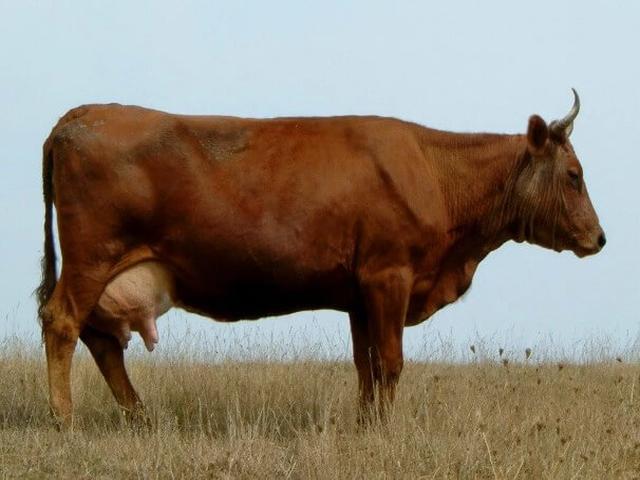
History of the breed. The origin of the breed can be traced back to Shorthorn and Dutch black-and-white cattle, which were brought to the farm of breeder and selector Boris Makarovich Bestuzhev in 1780. The breed is named after him. The farm was located in the village of Repyovka in the Simbirsk province (now Novospassky district of the Ulyanovsk region), where Bestuzhev crossed imported meat and dairy cattle with local breeds, carefully selecting animals based on their productivity. In the early 19th century, the blood of Simmental cows was added to the hybrid group. The resulting herd was bred for a long time without crossbreeding with other breeds, which allowed for the development of large-sized animals with disease resistance. The Bestuzhev breed of cows is one of the oldest and most versatile breeds. It was developed in the Ulyanovsk region of the Russian Federation and was officially recognized in 1869. In the early 20th century, to prevent the degeneration of the Bestuzhev breed, two experienced stations became interested in it: the Annenkov and Bezenchuk stations. These enterprises conducted breeding work with pedigree bulls, using semen from the Wylster Marsh and Shorthorn breeds. Subsequently, the Bestuzhev breed developed in purity. The state breeding book has been maintained since 1924. To increase milk productivity, blood from Holsteins and Simmentals is currently being introduced into the Bestuzhev breed. Exterior. Bestuzhev cows are distinguished by a variety of shades of red coat color, ranging from light red to deep cherry. Some individuals have characteristic white markings on the forehead, head, belly, chest, udder, legs, and tip of the tail. Representatives of this breed have a large build and strong bone structure. Their musculature is well developed, and the body has a deep and wide shape. The diagonal length of the body ranges from 154 to 159 centimeters, and the height at the withers is from 130 to 135 centimeters. The weight of bulls can reach up to 1200 kg, while cows can weigh up to 800 kg. The head is small, light, and wide in the forehead area. The profile is straight. The forehead is narrow, and the jaws are wide. The nasal mirror has a dark shade. The horns are large and white. The neck is of medium length, with barely noticeable skin folds. The chest is wide (from 37 to 43 cm) and deep (from 68 to 72 cm), with a well-developed brisket. The girth of the chest behind the shoulders ranges from 189 to 195 cm.
Gal si aad wax badan u ogaato
Soo galMaxaa lagu quudiyaa
Diet. They are undemanding in terms of nutrition, efficiently utilize feed, and can manage in winter with only roughage, as well as compound feed as a supplement to pasture-based feeding. With the onset of cold weather, root crops and silage are added to the animals' diet to increase milk yields. It is also recommended to use minerals and sugar beets. They gain weight quickly even when kept on pastures.
Sifooyinka jireed
Miisaanka labka: 900–1200 kg
Miisaanka dheddigga: 550–800 kg
Dhererka labka: 130–140 cm
Dhererka dheddigga: 130–135 cm
Deegaanka uu ku nool yahay
Belarus
Kasaakhistaan
Kirgistaan
Ruush
Tajikistan
Turkmenistan
Usbakistan
Yukrayn
Su'aalaha inta badan la isweydiiyo
Intee ayuu miisaamaa Bestuzhev breed?
Xayawaan qaangaar ah: lab — 900–1200 kg, dhedig — 550–800 kg.
Waa imisa dhererka Bestuzhev breed?
Dhererka garbaha: lab — 130–140 cm, dhedig — 130–135 cm.
Xaggee ayuu ka soo jeedaa Bestuzhev breed?
Waddanka asalka ah — Ruush.
Halkee lagu dhaqaa Bestuzhev breed?
Noocan waxaa laga helaa: Belarus, Kasaakhistaan, Kirgistaan, Ruush, Tajikistan, Turkmenistan, Usbakistan, Yukrayn.
Maxaa lagu quudiyaa Bestuzhev breed?
Diet.
Su'aal iyo jawaab
Weli su'aalo ma jiraan. Weydii kan ugu horreeya!
Soo gal si aad su'aal u weydiiso