








Mirandesa — iibso ama iibi


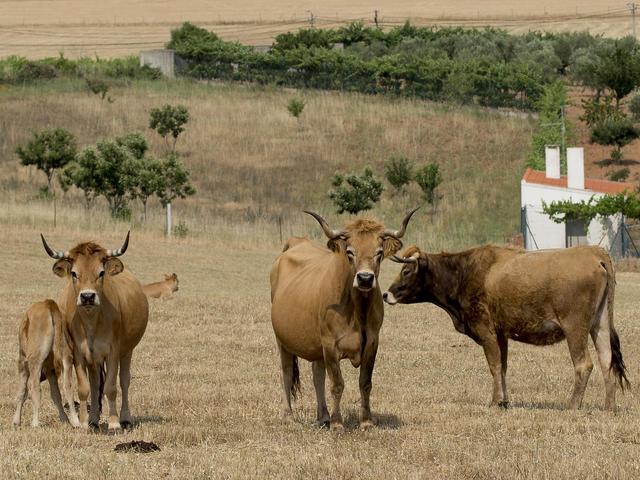
Breed history: The Mirandesa cow originates from the Terra de Miranda region in northeastern Portugal, in an area where the Mirandese language is spoken, particularly in the municipality of Miranda do Douro (Bragança province, Norte region). The first documented mention of the breed dates back to 1286. In 1870, Bernardo Lima described these animals as belonging to the wine region of Planalto Mirandês, highlighting their physical characteristics. In 1959, a breed registry for Mirandesa was established, becoming the first in the country. In the 1970s, a book on cattle in Portugal was published, which also mentioned these animals. Initially, Mirandesa was used as draft power and for meat production. Even in the late 1970s, these animals were used to pull fishing boats out of the water. With the spread of agricultural mechanization, the demand for draft cattle decreased, leading to a reduction in population. However, due to the high quality of the meat, the breed did not disappear. In 2007, the FAO assessed the conservation status of the breed as "not at risk." However, by 2023, DAD-IS changed the assessment to "endangered/vulnerable." In 2020, the population numbered 5,535 heads (5,230 cows and 305 bulls). Within the breed, there were previously various subtypes, such as Bragança, Beirão from Beira, Mirandês-Extremenho or Ratinho-Serra, and Harmelo. The latter was separated into a distinct breed, Harmelista, in 2007. Currently, the breed is primarily raised for beef production, which can be sold under a protected geographical indication (DOC/PDO). The larger Marinhoa cattle from the Aveiro region mainly descend from Mirandesa, possibly with some influence from the Minhotta breed. Exterior: The Mirandesa can be characterized as a medium-sized animal with a strong and muscular build. This breed of cows is distinguished by a variety of colors, which can be both light and dark brown, with cows often being lighter than bulls. A distinctive feature of their appearance is the so-called "curly tuft" — a kind of "hair" in the area of the head and horns, giving the breed additional individuality. The head of these cows is short and quite wide, emphasizing their massive build. The horns are large, with a characteristic light color, although their tips are darker. The horns grow outward, then curve down and point forward, giving the animals a very expressive appearance.
Gal si aad wax badan u ogaato
Soo galMaxaa lagu quudiyaa
Diet: In the spring and summer periods, the basis of the diet consists of pasture grasses. This allows cows to be provided with fresh feed that is rich in essential nutrients such as vitamins and minerals. With the arrival of autumn and winter, the diet changes significantly, as it is difficult (or practically impossible) to obtain pasture feed. Therefore, during this time, the main components of the diet become hay and straw, which serve as a good source of roughage and carbohydrates. During pregnancy and lactation, the nutritional needs of cows increase, which is why the diet must be more balanced and nutritious. It may include additional feed supplements, such as pumpkin or potatoes, which provide cows with extra carbohydrates and vitamins. This is necessary to maintain the health of both the mother and her offspring. The diet of calves depends on their age and stage of development. In the first days of life, the main source of nutrition for calves is colostrum, which is rich in immunoglobulins and other substances necessary for forming a strong immune system. After a few weeks, when the calf is gaining strength, it is gradually transitioned to the mother's milk and then to solid feed. Solid feed may include various plant products, such as hay, grass, as well as special calf mixes that promote their growth and development.
Sifooyinka jireed
Miisaanka labka: 900–1024 kg
Miisaanka dheddigga: 550–630 kg
Dhererka labka: 140–143 cm
Dhererka dheddigga: 130–133 cm
Deegaanka uu ku nool yahay
Bortugaal
Isbeyn
Su'aalaha inta badan la isweydiiyo
Intee ayuu miisaamaa Mirandesa?
Xayawaan qaangaar ah: lab — 900–1024 kg, dhedig — 550–630 kg.
Waa imisa dhererka Mirandesa?
Dhererka garbaha: lab — 140–143 cm, dhedig — 130–133 cm.
Xaggee ayuu ka soo jeedaa Mirandesa?
Waddanka asalka ah — Bortugaal.
Halkee lagu dhaqaa Mirandesa?
Noocan waxaa laga helaa: Bortugaal, Isbeyn.
Maxaa lagu quudiyaa Mirandesa?
Diet: In the spring and summer periods, the basis of the diet consists of pasture grasses.
Su'aal iyo jawaab
Weli su'aalo ma jiraan. Weydii kan ugu horreeya!
Soo gal si aad su'aal u weydiiso