












































Istoben cow — beli atau jual


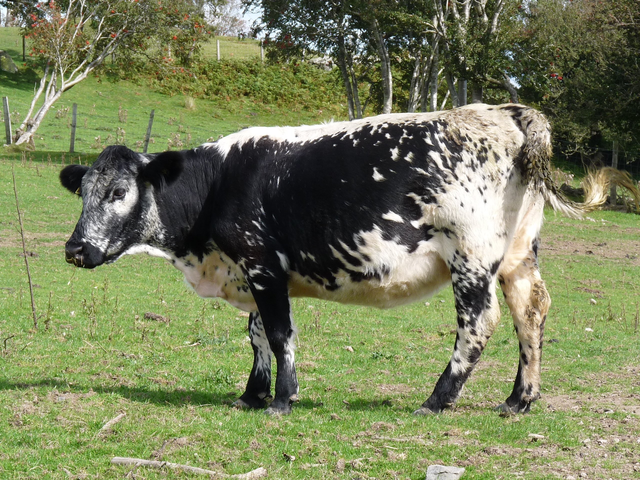
Breed history: The Istoben cow is a unique representative of Russian animal husbandry, excelling in both milk and meat productivity. The origin of the Istoben breed is closely linked to the Kirov region (formerly Vyatka province). The breed was developed in the late 19th to early 20th century in the area of the settlement of Istoben, where a large butter factory was located. The goal of the breeders was to improve the local cattle, known as the Great Russian breed, by crossing it with the best foreign and domestic breeds. In the late 19th and early 20th centuries, the import of Kholmogor and Swiss breeds began. Later, the Yaroslavl breed was added. In 1936-1937, limited crossing with the East Frisian breed was conducted. It is important to note that these crossings did not radically change the productivity of the local cattle but only improved certain characteristics. The main focus was on making the milk richer. In 1935, the breeding book of the Istoben breed was opened, and it received official recognition in 1943. The development of the breed occurred under favorable feeding conditions (flood meadows in the floodplains of the Vyatka and Moloma rivers) and a developed infrastructure for dairy product processing. However, in the following decades, due to competition with more productive dairy breeds, the population of Istoben cows significantly decreased. Currently, the preservation of the breed is carried out within special breeding farms in the Kirov region, where outbreeding and moderate inbreeding methods are used to maintain valuable lines. Exterior: The Istoben cow is medium-sized and characterized by a strong and compact build. These animals have noticeable dairy traits, making them versatile for both productive spheres—dairy and meat. The head of Istoben cows is quite coarse, with an elongated muzzle. The neck is thin, with slight folds. The chest is deep and long but not very wide, which somewhat limits their milk productivity compared to other breeds. The withers of these cows are narrow and of medium height. The back and loin have good length, giving the cow's body a proportional appearance. The hindquarters are long, sufficiently wide in the area of the hips, but slightly narrow at the ischial tuberosities. The legs are generally not well-placed, as defects such as cow hocks or splay legs and knee hooks are observed.
Log masuk untuk mengetahui lebih lanjut
Log masukApa yang perlu diberi makan
Diet: For adult cows, the diet usually includes hay, silage, concentrates such as grain, cake, and meal, as well as root vegetables. It is important to ensure access to mineral supplements. During the lactation period, the amount of concentrates increases to meet the high energy needs of the cow. Calves receive milk in the first months of life. Gradually, as they grow, hay, grain, and compound feeds are introduced into their diet, but it is important to do this gradually so that the calves can adapt to the new feed. For pregnant cows, the diet should be particularly balanced. It is necessary to provide sufficient vitamins and minerals, including calcium and phosphorus, for the normal development of the fetus. It is also recommended to increase the amount of roughage to maintain normal digestive system function.
Parameter fizikal
Berat jantan: 720–950 kg
Berat betina: 430–480 kg
Tinggi jantan: 115–136 cm
Tinggi betina: 105–115 cm
Habitat
Belarus
Rusia
Ukraine
Soalan lazim
Berapakah berat Istoben cow?
Haiwan dewasa: jantan — 720–950 kg, betina — 430–480 kg.
Berapakah ketinggian Istoben cow?
Ketinggian pada paras layu: jantan — 115–136 cm, betina — 105–115 cm.
Dari mana berasal Istoben cow?
Negara asal — Rusia.
Di mana Istoben cow diternak?
Baka ini tersebar di: Belarus, Rusia, Ukraine.
Apa yang perlu diberi makan kepada Istoben cow?
Diet: For adult cows, the diet usually includes hay, silage, concentrates such as grain, cake, and meal, as well as root vegetables.
Soal jawab
Belum ada soalan. Ajukan soalan pertama!
Log masuk untuk bertanya