


























Markidzhanskaya cow — iibso ama iibi

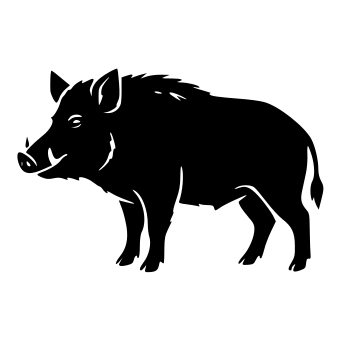


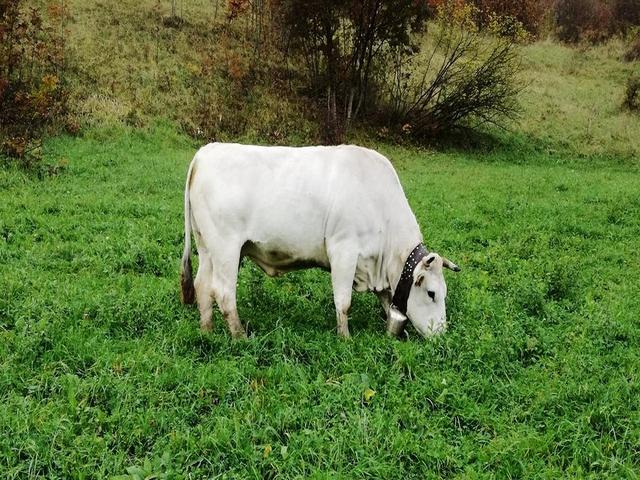
Breed history: The Markidzhanskaya cow is a meat breed whose history is closely linked to the Marche region in Italy. Its origin and development is a complex story filled with contradictory claims and various versions. There are several versions of the origin of the Markidzhanskaya breed. One states that the ancestors of Markidzhanskaya cows were Asian cattle brought to Italy in the 4th century AD after barbarian invasions. Another version claims that the breed is relatively young, having been distinguished only in 1933 under the local name "improved Marki." According to this version, local cattle were mixed with Chianina and two other mountain breeds. Subsequently, selection was conducted for larger animals that were better suited for the more fertile slopes of the region, where there was more feed. In any case, the breed developed in a hilly terrain with hot dry summers and cold wet winters, on low-quality feed. This endurance has been preserved to this day. By the early 20th century, additional crossbreeding with the Romagnola breed was carried out to reduce height and improve conformation. In 1928, a ban on any crossbreeding was introduced, and official selection of the Markidzhanskaya breed began, transforming it from a working breed into a meat breed. In 1957, ANABIC (Associazione Nazionale Allevatori Bovini da Carne - National Association of Italian Beef Cattle Breeders) was established, playing a key role in the development and promotion of the breed. Exterior: Markidzhanskaya cows are known for their large and powerful build. They have a long body characterized by well-developed musculature, especially in the hindquarters and thighs. They possess a rather fine skeleton, making them agile and adapted for movement in mountainous areas. Their lumbar region and hindquarters are shaped to withstand load and provide stability. The cows have strong, medium-length legs, allowing them to move confidently even on uneven terrain. Their coat varies from light gray to white, but it is noteworthy that their skin is pigmented dark, especially on the tongue, around the eyes, muzzle, and tail, which also ends with a dark tuft. The fur of the Markidzhanskaya cow is short and dense. Newborn calves can be distinguished by their characteristic reddish-brown color, which then changes to a lighter shade, more typical of adult animals, within the first month of life.
Gal si aad wax badan u ogaato
Soo galMaxaa lagu quudiyaa
Diet: Markidzhanskie cows are characterized by their hardiness in feeding, which makes them very convenient for keeping in various conditions. They can obtain nutrients even from rough feeds, giving them great flexibility in feed choices. However, to remain healthy and productive, their diet must be balanced. The main components of the diet should be hay and silage, which provide the cows with the necessary fiber and carbohydrates. Grain serves as an additional source of energy, while mineral supplements help maintain the balance of essential vitamins and minerals. It is especially important to maintain proper nutrition during pregnancy and lactation, when the cow's nutrient needs increase. During this period, the cow requires more nutritious feeds to maintain health, as well as to ensure the full development of the fetus and milk production. This requires an increase in the content of proteins, calcium, and phosphorus in the diet. Calves, in turn, initially receive all the necessary substances from their mother's milk. This milk is the primary source of nutrition for newborns, providing them with essential proteins, fats, and carbohydrates for rapid growth. Gradually, as they grow, hay and concentrates are introduced into the calves' diet to prepare them for the transition to solid feeds.
Sifooyinka jireed
Miisaanka labka: 900–1460 kg
Miisaanka dheddigga: 580–680 kg
Deegaanka uu ku nool yahay
Arjentiina
Awstaraaliya
Baraasiil
Boqortooyada Midowday
Maraykanka
Meksiko
Niyuusiilaand
Talyaani
Su'aalaha inta badan la isweydiiyo
Intee ayuu miisaamaa Markidzhanskaya cow?
Xayawaan qaangaar ah: lab — 900–1460 kg, dhedig — 580–680 kg.
Xaggee ayuu ka soo jeedaa Markidzhanskaya cow?
Waddanka asalka ah — Talyaani.
Halkee lagu dhaqaa Markidzhanskaya cow?
Noocan waxaa laga helaa: Arjentiina, Awstaraaliya, Baraasiil, Boqortooyada Midowday, Maraykanka, Meksiko, Niyuusiilaand, Talyaani.
Maxaa lagu quudiyaa Markidzhanskaya cow?
Diet: Markidzhanskie cows are characterized by their hardiness in feeding, which makes them very convenient for keeping in various conditions.
Su'aal iyo jawaab
Weli su'aalo ma jiraan. Weydii kan ugu horreeya!
Soo gal si aad su'aal u weydiiso