









































Brown Carpathian breed — iibso ama iibi


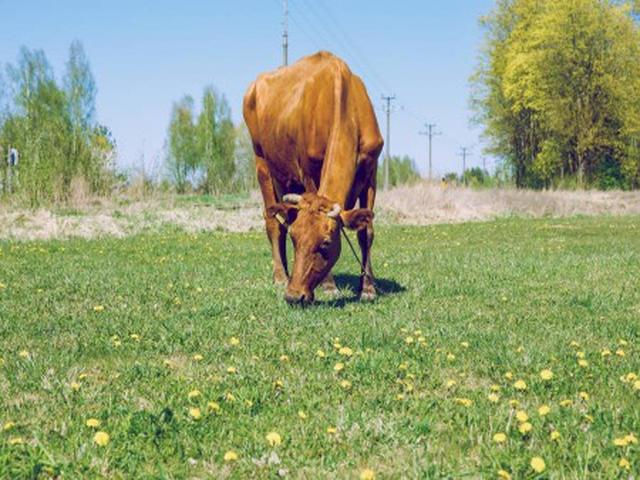
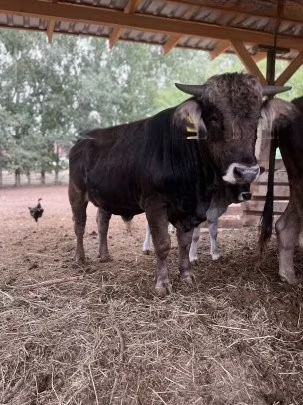
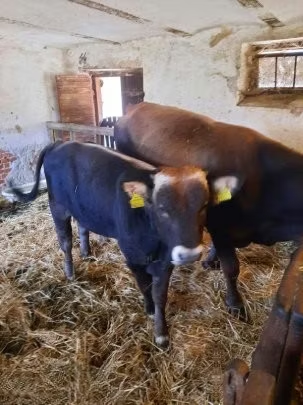
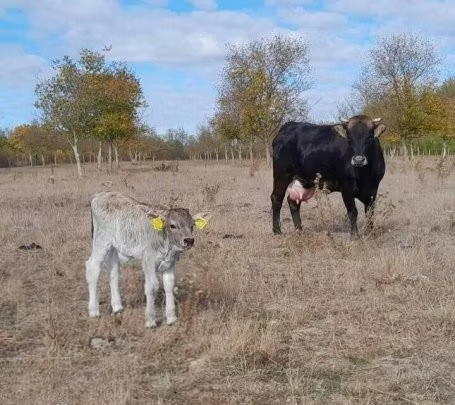
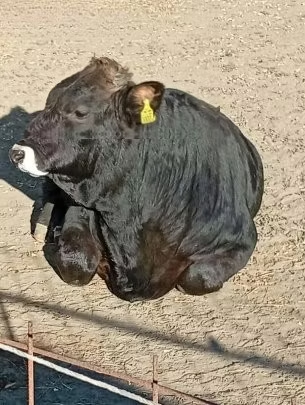
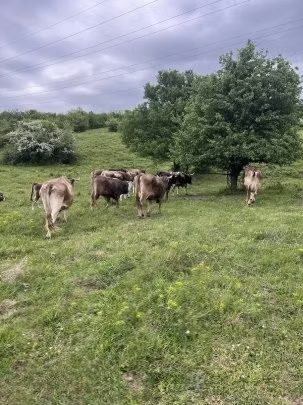
History of the breed. The breed originated in Ukraine. The Brown Carpathian cattle is the result of crossing two ancient breeds: "Mokan" and "Ryzhka," which were brought to the mountainous regions of Ukraine many centuries ago. Subsequently, this breed was improved through crossbreeding with other breeds, such as Swiss, Montafon, and Gorno-Inskiy. This allowed for an increase in its productivity. However, improvements in performance were observed only under conditions of quality feeding. As a result of long-term breeding work, in 1972, the Brown Carpathian cattle was officially recognized as a separate breed. The Brown Carpathian breed of cows represents a breed of cattle oriented towards dairy production. Although the breed is considered dairy, it is currently used for dual purposes — both for milk production and for meat. Thus, the Brown Carpathian can confidently be called a meat-dairy breed that is well adapted to life in mountainous conditions. It is one of the few breeds resistant to caisson disease, which is often encountered at high altitudes. Representatives of this breed have a brown color with a reddish tint and a white stripe along the spine. High mountain pastures and a unique climate contribute to the formation of a special milk flavor, as well as the development of marbled meat. Nowadays, this breed is at risk of extinction due to constant crossbreeding with commercial breeds to increase milk productivity. Exterior. Within this breed, two types can be distinguished: mountain and valley (plain). They differ in size and productivity. The mountain type has a strong and compact build, a light and dense skeleton, as well as strong hooves. Animals of this type are well adapted to the conditions of foothills and mountains. Their body is wide and deep, and the chest is short. The height at the withers is 120–130 cm, which is lower than that of the valley type cows. The weight of an adult individual ranges from 400 to 450 kg. Milk productivity ranges from 2200 to 3500 kg with a fat content of 3.5 to 4%. The valley (plain) type has a light but strong skeleton with a longer and less wide body. The coat is usually lighter. Animals of this type are well adapted to the conditions of the plain area of Transcarpathia. The weight of an adult individual ranges from 450 to 550 kg. Milk productivity is higher — from 3000 to 4000 kg. Both types have good meat productivity, with a slaughter yield of 55–58%.
Gal si aad wax badan u ogaato
Soo galMaxaa lagu quudiyaa
Ration. During the stall period, the Carpathian cow should be provided with a balanced diet, including 15–20 kilograms of mixed silage and 6–12 kilograms of oat or pea straw. To maintain an optimal diet, it is also necessary to ensure the intake of 15 kilograms of meadow hay or sown grass for every 100 kilograms of the animal's live weight. Beet, as a milk-producing feed, can be beneficial during the early lactation period, but its amount should not exceed 40 kilograms per day. Sugar and semi-sugar beets should be given at a maximum of 14 kilograms per day per head.
Sifooyinka jireed
Miisaanka labka: 750–900 kg
Miisaanka dheddigga: 400–550 kg
Dhererka labka: 125–150 cm
Dhererka dheddigga: 120–130 cm
Deegaanka uu ku nool yahay
Belarus
Booland
Hangari
Moldofa
Ruush
Yukrayn
Su'aalaha inta badan la isweydiiyo
Intee ayuu miisaamaa Brown Carpathian breed?
Xayawaan qaangaar ah: lab — 750–900 kg, dhedig — 400–550 kg.
Waa imisa dhererka Brown Carpathian breed?
Dhererka garbaha: lab — 125–150 cm, dhedig — 120–130 cm.
Xaggee ayuu ka soo jeedaa Brown Carpathian breed?
Waddanka asalka ah — Yukrayn.
Halkee lagu dhaqaa Brown Carpathian breed?
Noocan waxaa laga helaa: Belarus, Booland, Hangari, Moldofa, Ruush, Yukrayn.
Maxaa lagu quudiyaa Brown Carpathian breed?
Ration.
Su'aal iyo jawaab
Weli su'aalo ma jiraan. Weydii kan ugu horreeya!
Soo gal si aad su'aal u weydiiso
Xayeysiisyada gobolkaaga