

























Kanchim — beli atau jual

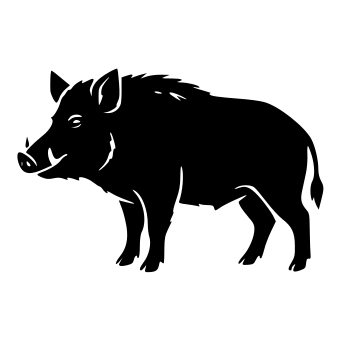
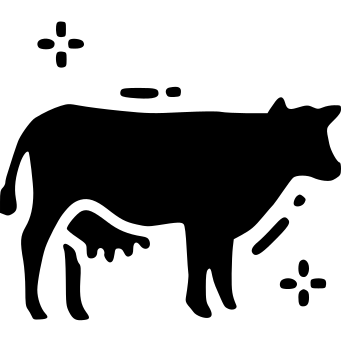

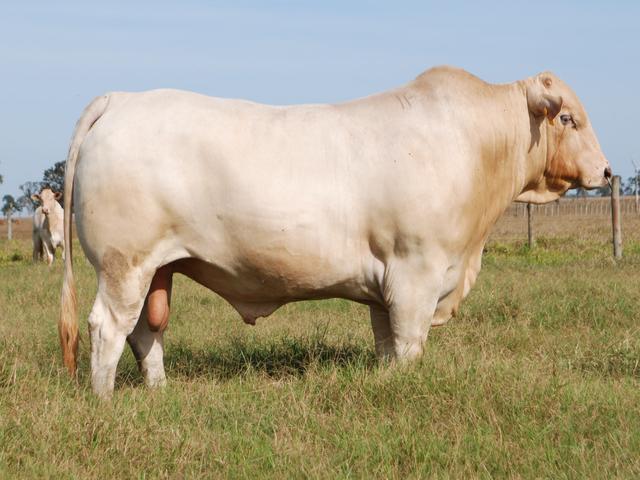
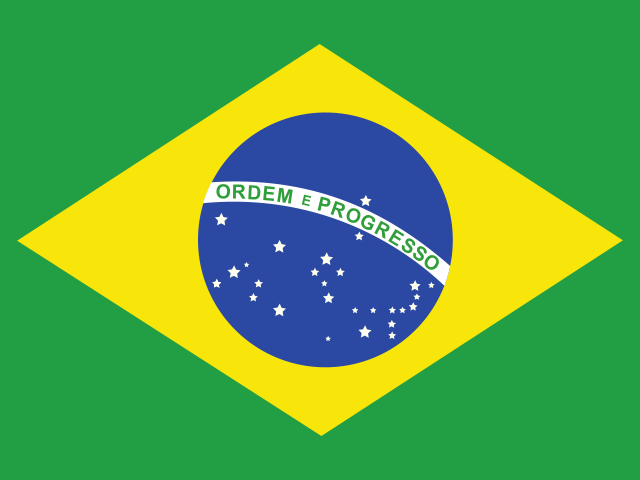
Breed history: Kanchim is the result of the meticulous work of Brazilian breeders who aimed to create a meat breed ideally adapted to the harsh conditions of Brazil's tropical climate. The breeding of Kanchims began in 1922 in the state of Goiás, Brazil, by the Ministry of Agriculture. The goal was to improve the local cattle population, which, although adapted to the tropical climate through crossbreeding with zebu (Bos Indicus), lagged behind European breeds in growth and meat productivity. European breeds, such as Charolais, had a high meat yield but poorly tolerated the heat, parasites, and low-quality feed typical of central Brazil. In 1936, a herd of Charolais was moved to São Carlos, São Paulo, to the EMBRAPA research station farm. It was here that the main breeding work began. In 1940, Dr. Antonio Teixeira Viana initiated crossbreeding programs of Charolais with zebu breeds, mainly with Indubrasil, as well as Guzerat and Nelore. Experiments showed that the suitable ratio was 5/8 Charolais and 3/8 zebu. The first animals with this gene ratio were born in 1953. The breed was named "Kanchim" after a tree common in the region. In 1971, the Brazilian Association of Kanchim Breeders (ABCCAN) was established, and on November 11, 1972, the breeding book was opened. The official recognition of the breed by the Ministry of Agriculture of Brazil took place on May 18, 1983. Currently, the Nelore breed predominates in the formation of new Kanchim lines, and seed material from Charolais from America and France is also used. Exterior: Kanchims have a strong build that combines features of European meat breeds and zebu. Their bodies are muscular, resembling Charolais, but with a slight hump inherited from zebu. They are medium-sized with harmonious proportions. The coat of Kanchims varies from white to light beige. The hair is short, smooth, and fits closely to the body, which helps the animals withstand the hot climate. Their heads are of medium size, proportional to the body, with a broad forehead and short muzzle. The polled nature of Kanchims facilitates management and makes them safer to keep. The neck is of medium length, thick, with good muscles. The chest is deep and spacious enough for the heart and lungs, which is important for endurance. The back of Kanchims is wide and straight, transitioning into a long rump.
Masuk untuk info lebih lanjut
MasukApa yang harus diberikan makan
Diet: Cattle must eat a varied diet that contains all necessary nutrients. The basis of their nutrition consists of quality grasses, hay, concentrates, and mineral supplements, which can be found in their housing areas and nearby. During pregnancy and lactation, cows require an enriched diet. It is necessary to increase the protein and calorie content in the feed to support the body during this period and ensure the development of the calf. Young calves are fed their mother's milk in the first weeks, which is the main source of nutrients. As the calves grow, they are gradually accustomed to consuming plant-based feeds, including fresh grass and compound feeds.
Parameter fisik
Berat jantan: 650–900 kg
Berat betina: 530–600 kg
Tinggi jantan: 125–147 cm
Tinggi betina: 122–130 cm
Habitat
Brasil
Cile
Meksiko
Pertanyaan umum
Berapa berat Kanchim?
Hewan dewasa: jantan — 650–900 kg, betina — 530–600 kg.
Berapa tinggi Kanchim?
Tinggi di layu: jantan — 125–147 cm, betina — 122–130 cm.
Dari mana asal Kanchim?
Negara asal — Brasil.
Di mana Kanchim dibudidayakan?
Ras ini tersebar di: Brasil, Cile, Meksiko.
Apa yang harus diberikan makan kepada Kanchim?
Diet: Cattle must eat a varied diet that contains all necessary nutrients.
Tanya Jawab
Belum ada pertanyaan. Ajukan yang pertama!
Masuk untuk mengajukan pertanyaan